



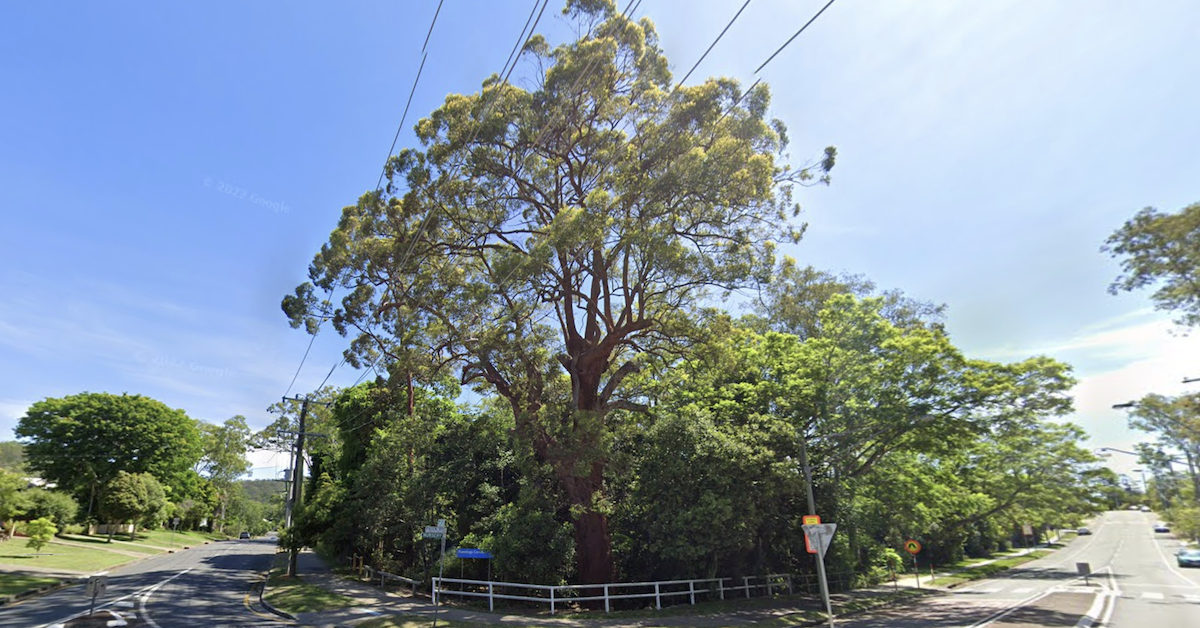
Every day, traffic moves steadily along Payne Road in The Gap. Cars line up at the Paten Road roundabout, cyclists pass through, and locals go about their routines. In the middle of this familiar scene stands a tree that many people do not notice at first.
Near the roundabout, a large tallowwood rises above nearby vegetation. Local residents have identified it as a tree that may be more than 300 years old. Online community discussions point to this specific location as home to one of the suburb’s oldest surviving trees. Its presence has become known mainly through word of mouth rather than formal recognition.

Standing at a busy suburban corner
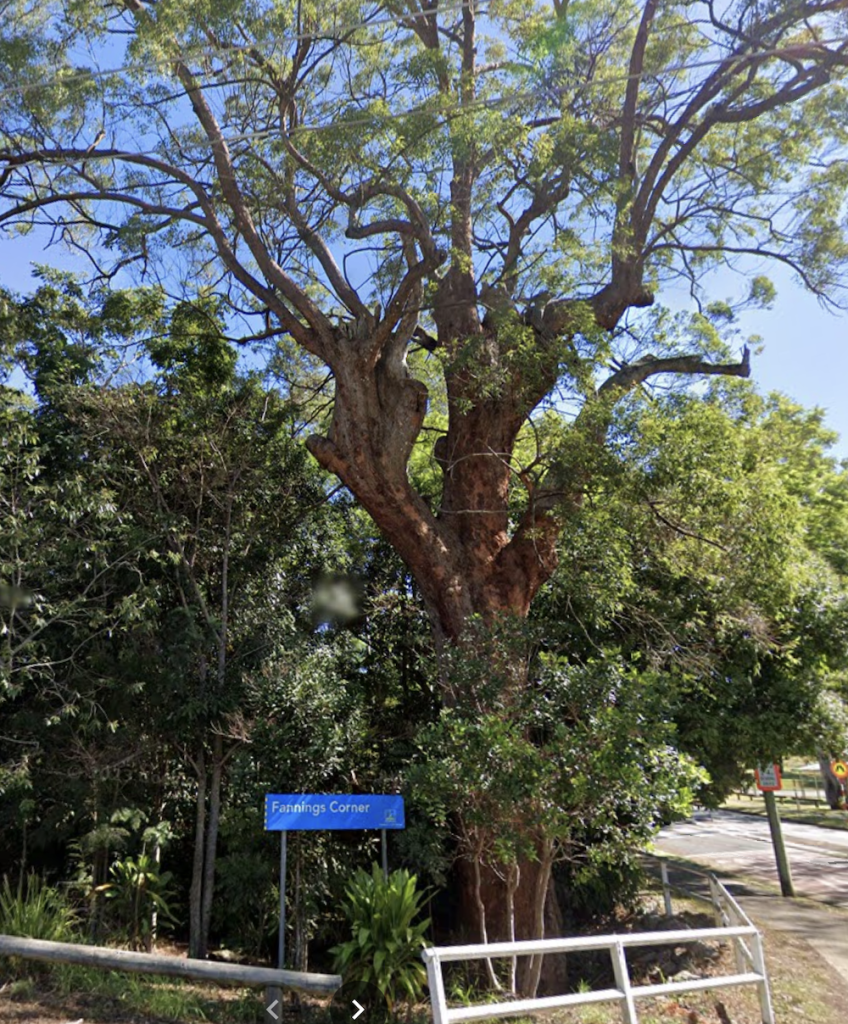
Unlike many notable trees, it is not set within a park or reserve. It grows beside the road, surrounded by traffic, footpaths and homes. Because of its setting, it can blend into the background. However, when viewed more closely, its size becomes clear. Its trunk is thicker than that of the surrounding trees, and its canopy spreads wider, making it stand out once noticed.
The tree is a Eucalyptus microcorys, commonly known as tallowwood. This species is native to eastern Australia and is known for its durability and long lifespan.

Historical records and forestry references indicate that tallowwoods can live for several centuries, with some reaching 400 years or more. They were widely valued for their strong timber, which was used in construction and infrastructure. Because of this, many large specimens were removed during periods of logging.

The Payne Road tree’s age has not been formally verified in public records. However, its size and condition are consistent with older tallowwoods found in other parts of Queensland.
A link to The Gap before development
Before suburban development, The Gap was covered in native forest. Historical accounts describe the area as heavily timbered, with species such as tallowwood forming part of the landscape. During the 19th century, much of this forest was cleared for timber and later for farming.
Local historians note that Payne Road itself dates back to early settlement routes in the area. Over time, farmland gave way to housing and roads, shaping the suburb as it is today.



If the estimated age of the tree is accurate, it would have been growing before these changes began. It would have remained as the surrounding land shifted from forest to cleared ground and eventually to residential streets.
Survival in a landscape shaped by logging
Tallowwood was a valuable resource in early Queensland, often used for structural timber and transport-related construction. As a result, large trees of this species were commonly cut down.
Information from heritage records of similar trees suggests that surviving old tallowwoods were often spared due to location, access challenges or simple oversight. In some cases, their position made them less practical to remove.
There is no confirmed record explaining why the Payne Road tree was left standing. Its survival is likely due to a combination of these factors rather than a single reason.
The tree is not listed as a heritage site in publicly available records. Instead, its recognition comes from local awareness. Community discussions online have identified it as a notable tree within Brisbane, with contributors pointing to its location and age.
Environmental and community value today
Mature trees such as this one play an important role in suburban environments. Their size allows them to support wildlife, including birds and insects that rely on large canopies and tree hollows.
They also contribute to the character of an area. In established suburbs like The Gap, older trees can provide a sense of continuity as the built environment changes around them.
For those who travel along Payne Road regularly, the tree can be easy to overlook. Its surroundings are busy, and it does not carry signage to draw attention. However, once identified, it becomes a recognisable part of the streetscape. Its height and trunk size set it apart from nearby vegetation.
Still standing through change
The tallowwood on Payne Road has remained in place as the suburb around it has changed over time. From forest to farmland and then to residential streets, it has been part of each stage of that history.
Its continued presence highlights how small parts of the natural landscape can remain even as development expands. While many trees of similar age were removed, this one continues to grow at a busy suburban intersection.
Published 21-April-2026
.