


Enoggera’s Gallipoli Barracks and the 9th Battalion’s Road to Anzac Cove

More than a century after the 9th Battalion, Australian Imperial Force, assembled at Bell’s Paddock in Enoggera and marched into history at Gallipoli, the ground beneath Gallipoli Barracks remains one of Queensland’s most significant military sites, carrying a story that reaches directly into the lives of The Gap and Enoggera residents each Anzac Day.


The connection between this stretch of northwest Brisbane and Australia’s defining military moment is not incidental. The 9th Battalion formed at Enoggera near Brisbane and was the first battalion raised in the 3rd Brigade of the 1st Division. When Britain declared war on Germany in August 1914, Queensland answered quickly, and Enoggera became the place where that answer took shape.
From Bell’s Paddock to the Front

The ground now occupied by Gallipoli Barracks has served military purposes since the mid-nineteenth century, but August 1914 marked its most consequential moment. According to a University of Queensland master’s thesis examining the 9th Battalion’s formation, men began arriving at Bell’s Paddock, Enoggera, on 17 and 18 August 1914, pitching tents and beginning to organise. On 21 August, Lieutenant-Colonel H.W. Lee and his fellow officers arrived, and the formal formation of the 9th Battalion AIF began. By early September, the Enoggera camp held the pool from which the battalion’s first contingent was selected.
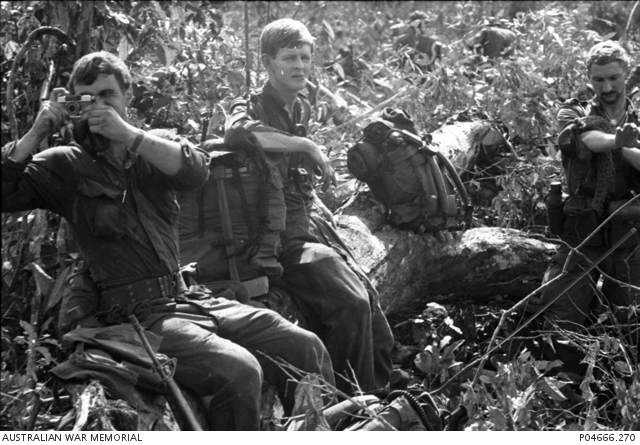
The thesis challenges the common assumption that the men who landed at Gallipoli were enthusiastic amateurs with little preparation. Instead, it argues that the 9th Battalion drew on decades of prior military development, training, and inherited tradition that began with Queensland colonial volunteer units in 1867, continued through Federation and compulsory training schemes, and culminated in the battalion’s formal raising in 1914. Enoggera was not simply a mustering point but the culmination of this long military lineage. Locals then and now recognise this connection through the 9th’s identity as the “Moreton Regiment,” a title associated with the pre-war militia that formed the backbone of the new battalion.

The 9th served as the first battalion recruited in Queensland and formed part of the 3rd Brigade alongside the 10th, 11th, and 12th Battalions. Authorities raised the battalion within weeks of the declaration of war in August 1914, and it embarked just two months later. Enoggera played a key role in enabling this rapid mobilisation.
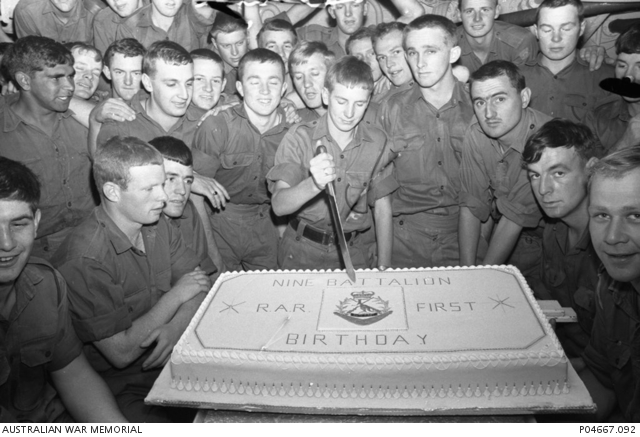
First Ashore at Anzac Cove

What followed made the 9th Battalion’s name permanent in Australian military history. The battalion embarked for Gallipoli on the destroyers HMS Queen, Beagle and Colne and was the first ashore at Gallipoli at 4:28am on 25 April 1915. The battalion formed the vanguard of the 3rd Brigade’s covering force and went on to be involved in all major campaigns on the Gallipoli peninsula until the evacuation in December 1915.

Coming ashore early on 25 April 1915 at Anzac Cove, the battalion joined the rest of 3rd Brigade. Lieutenant Duncan Chapman was identified by historian C.E.W. Bean as the first soldier ashore at Gallipoli. The battalion served at Gallipoli until November 1915, then returned to Egypt before sailing to France in March 1916, where it fought through some of the Western Front’s hardest campaigns, including Pozières, Messines, Ypres and the Hindenburg Line, through to the armistice on 11 November 1918.

A Living Legacy in The Gap and Enoggera

The barracks that witnessed those August 1914 formations carries its history in its very name. On Anzac Day, 25 April 1990, the base was renamed Gallipoli Barracks, a direct tribute to the men who assembled there and made that landing. The Gallipoli Barracks are significant as the training ground for thousands of Queenslanders who served in wars throughout the twentieth century, and the site holds local heritage significance under the Brisbane City Plan 2014.
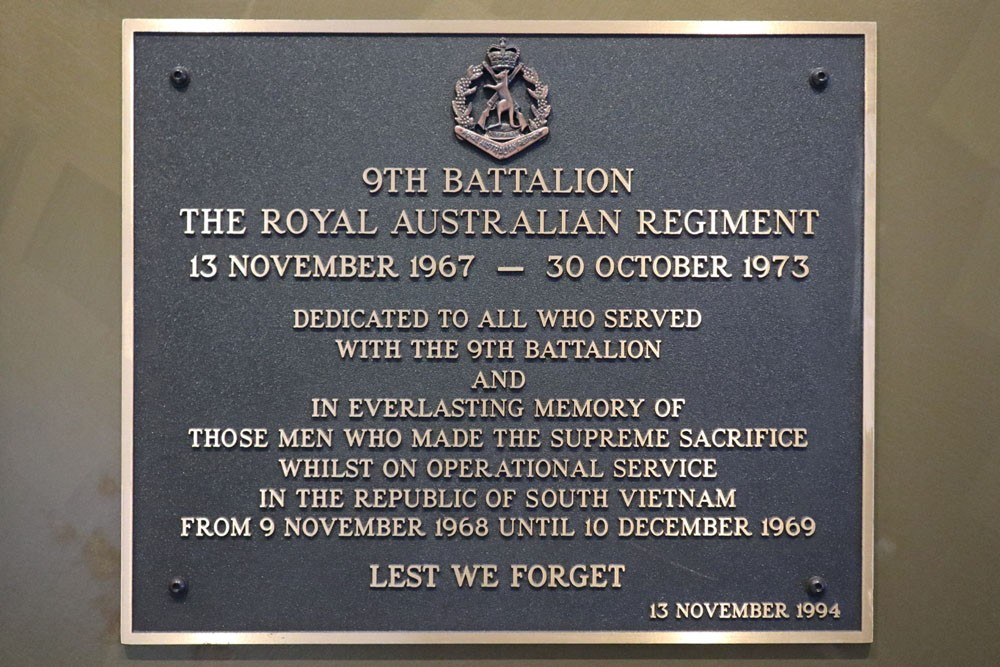
Photo Credit: Anzac Square

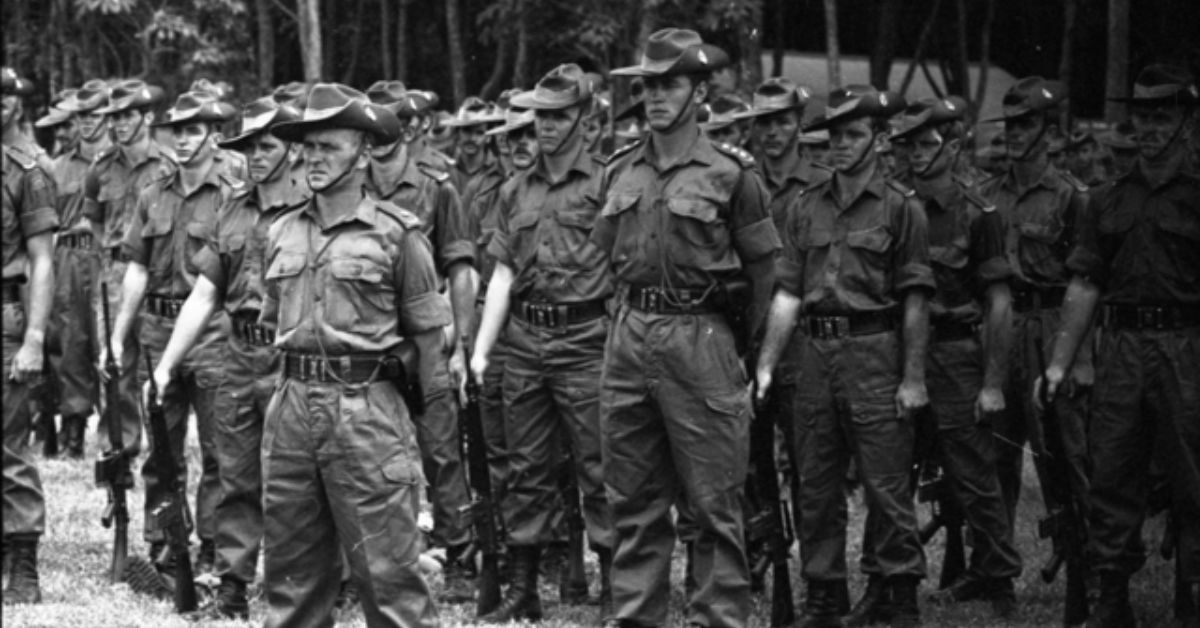
Today the base remains one of Australia’s largest Army installations, home to armoured, artillery, engineer, signals, infantry, medical and other combat service support units. While the 8th/9th Battalion, Royal Australian Regiment (8/9 RAR) carries the tradition within the regular army, the 9th Battalion, Royal Queensland Regiment (9 RQR) also maintains the historic link. As the current reserve unit based at the barracks, 9 RQR keeps the numerical connection to those men who first assembled at Bell’s Paddock alive for a new generation of Queenslanders.

More Than History, It Happened Here

For residents of The Gap and Enoggera, the Anzac story is not something that happened somewhere else. It began here, on the paddocks and training grounds that now sit behind the Gallipoli Barracks gates on their doorstep. The 9th Battalion’s formation in August 1914 drew on men from across Queensland, but it was this specific patch of northwest Brisbane where they came together, trained and prepared for what lay ahead.

Each Anzac Day, that history reasserts itself. The Dawn Service, the Last Post and the roll of honour connect directly to the ground residents walk past every day. For families in The Gap and Enoggera, understanding that the men who were first ashore at Anzac Cove assembled just streets away adds a particular weight to the words “Lest We Forget.”

Anzac Day services in the local area take place on 25 April each year. The Australian War Memorial’s unit record for the 9th Battalion AIF, along with individual service records, are searchable through the National Archives of Australia at naa.gov.au. Further history of the 9th Battalion is held by the 9th Battalions Association at 9bnassoc.org.


Published 27-March-2026.
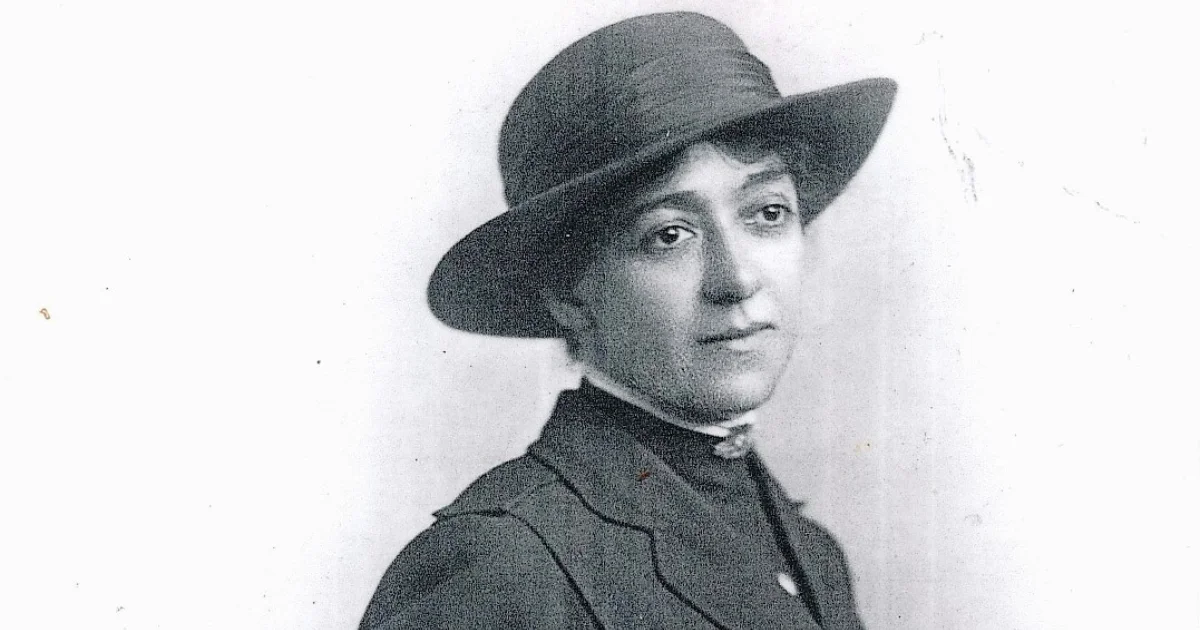
Helping Hands: WWI Army Masseuse from The Gap

A masseuse is not the first image that comes to mind when Australians remember the First World War. Yet one of the war effort’s most unusual roles was filled by a woman from The Gap. Pearl Constance Paten was one of only 29 women deployed overseas with the Australian Army Massage Service, using skilled hands to help injured Anzac soldiers begin the long road to recovery.

Anzac Day series

Who was Pearl?

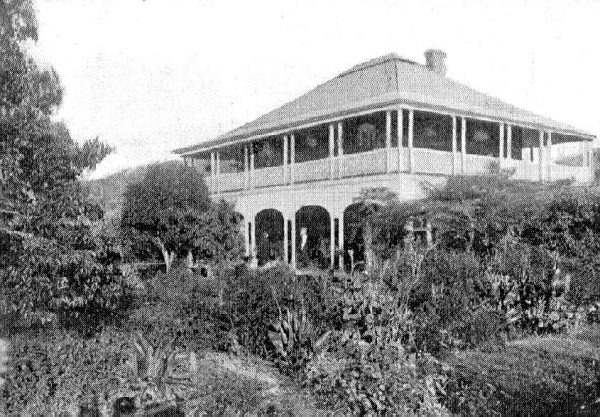
Born on 3 November 1884 at “Walton” House at The Gap, Pearl was one of only 29 women deployed overseas as part of the Australian Army Massage Service during WWI. It is a distinction that has gone largely unrecognised for more than a century, yet her contribution, and that of the small, determined band of women who served alongside her, helped lay the foundations for what we now know as physiotherapy.


Read: Stan the Ram’s Legacy Lives On at Enoggera This ANZAC Day


Pearl Constance Paten
Walton (Photo credit: The Gap Historical Society)

Pearl’s father Jesse Paten was a self-made immigrant who built a farming and business empire spanning more than 500 acres at The Gap. The family of ten children punched well above its weight.

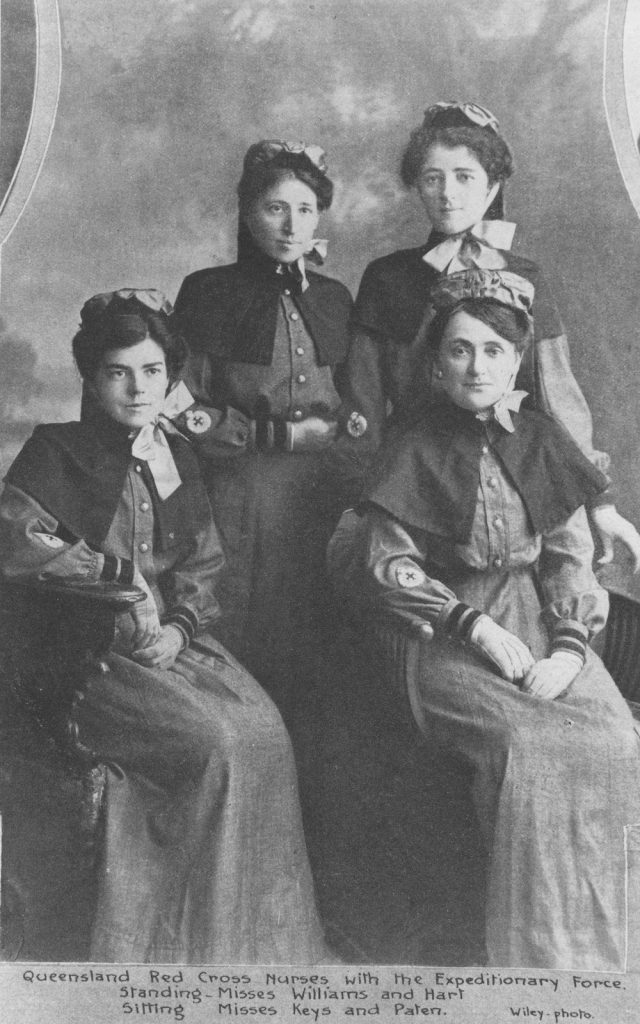
Pearl’s youngest sister Winifred became Queensland’s first female graduate barrister. Her sister Eunice was among the first four Queensland nurses sent overseas, eventually being awarded the Royal Red Cross (2nd Class) for her service at Alexandria and on the Western Front.

Her brother Edward, the youngest of the Paten children, enlisted in December 1915 with the 49th Battalion and was killed by shellfire near Warneton, Belgium, in July 1917. He was 21 years old.

Even eldest sister May served on the home front, driving injured soldiers from railway stations and ports to hospitals as part of the Royal Australian Automobile Club of Queensland Transport Corps.

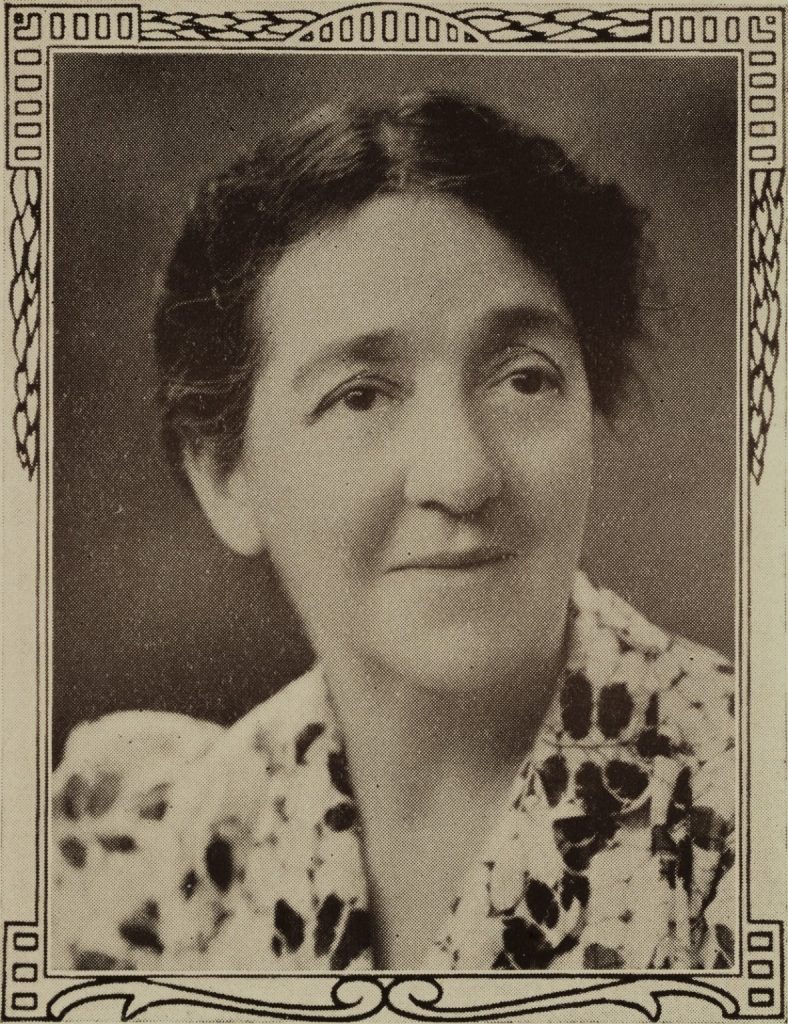
Pearl Constance Paten
Photo credit: Biographical record of Queensland women, State Library of Queensland.

Massage: Her War Calling

Pearl’s own path into the war effort began long before the guns started firing. In 1902, she sat the entrance exams for the University of Sydney, at the time one of the only institutions in Australia offering formal training in massage. She returned to Brisbane, established herself in practice, including at a clinic on George Street in the city, and became an active member of the Australian Massage Association (AMA).

When war broke out, the AMA wasted no time lobbying for massage therapy to be formally incorporated into military medicine, including as a treatment for shell shock. That campaign paid off. In November 1915, the Australian Army Massage Reserve (AAMR) was established, and Pearl was among its founding members. The work was far from easy. Masseuses routinely saw between 30 and 40 patients a day. Treatments were physically demanding, involving muscle manipulation, hot baths and electrotherapy.

First four Queensland nurses selected for the Australian Army Nursing Service, 1914. (Photo credit: John Oxley Library, State Library of Queensland, Negative number: 189830)

There was a social battle to fight too. At the outset, many military hospitals were reluctant to employ female masseuses, considering it improper for women to place their hands on male patients. Pearl and her colleagues proved those objections wrong, day after day, through sheer competence and professionalism.

In late 1918, after the Armistice, Pearl was posted to the 14th Australian General Hospital in Egypt, where she served from 28 November until Christmas Day. Her primary purpose appears to have been accompanying the hospital ship HMAT Nestor back to Australia, providing rehabilitation treatment to wounded soldiers during the long voyage home. On board, she was reunited with her sister Eunice, who served as sister-in-charge. When the ship arrived in Brisbane, both women were placed in quarantine at Lytton due to the Spanish Flu outbreak.

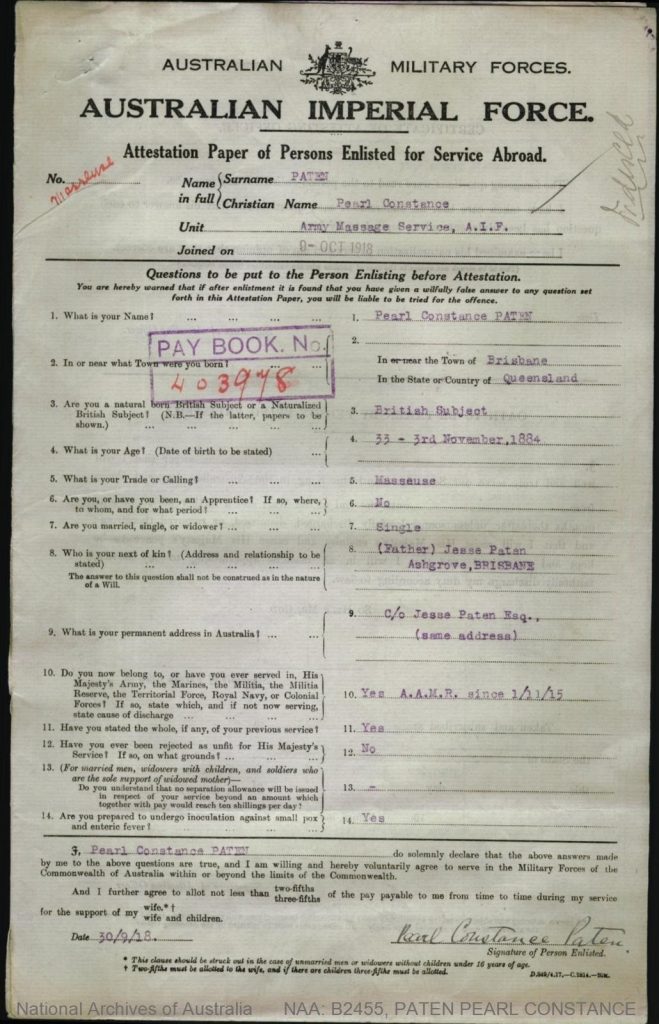
Service Records Pearl Constance Paten (Photo credit: National Archives of Australia, Item ID 8010122)

The war may have ended, but Pearl’s work was far from over. Appointed head masseuse at Rosemount Military Hospital in Windsor, she arrived to find conditions that were, frankly, a scandal. The massage ward was not yet finished when patients began arriving. With upwards of 250 patients and just ten masseuses on staff, the department was overwhelmed.

One patient was so incensed he wrote to a local newspaper in June 1919, saying it was only because of Pearl’s “devotion to duty” and her love for her wounded men that the department was functioning at all. The situation drew sustained media coverage and was publicly described as a “disgrace to State.” A new orthopaedic wing with a dedicated massage ward eventually opened by the end of 1919.


Read: Anzac Day: Big crowds expected as Queenslanders turn out to remember fallen


Photo credit: The Gap Historical Society

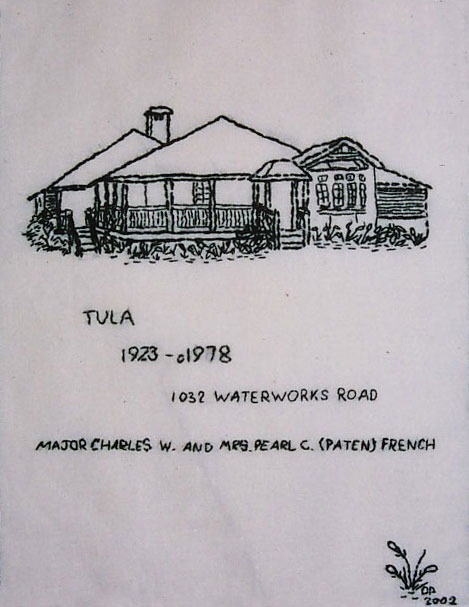
Pearl married Captain Charles William Scott French in 1923, and the couple built their home “Tula” on the same land as her childhood home at The Gap, a fitting full circle for a woman whose story is so deeply rooted in this community. She remained active in the Australian Masseuses Association and in organisations supporting Queensland war nurses for years afterwards.

This Anzac Day, as wreaths are laid and bugles sound across the country, spare a thought for Pearl Paten, a daughter of The Gap who served her country not with a rifle, but with trained hands and an unshakeable sense of duty.

Published 17-March-2026

Stan the Ram’s Legacy Lives On at Enoggera This ANZAC Day

The 8th/9th Battalion, Royal Australian Regiment at Enoggera is marking ANZAC Day by reflecting on over five decades of tradition linked to its distinctive regimental mascot—Stan the Ram.


Marching on Four Legs: A History of Stan the Ram at Enoggera

For more than 50 years, a succession of merino rams, each officially named John Macarthur but known to diggers as Stan, has served as the symbolic mascot of the 8/9 RAR. The battalion is based at Gallipoli Barracks in Enoggera. As ANZAC Day approaches, the battalion reflects on the enduring legacy of Stan the Ram, a tradition born in 1971 and still marching strong in 2025.

 Enoggera barracks
Caption: Private John ‘Stan’ MacArthur IX arriving at Enoggera barracks. (2020)
Photo Credit: Australian Army/Facebook

From Scone to Parade Ground

The tradition began in early 1971 when Mr W.W. Collinson of Scone, New South Wales, donated a purebred merino to the 9th Battalion, Royal Australian Regiment. With permission from the Macarthur-Onslow family, the ram was named Private John Macarthur I. This move is a tribute to Australia’s wool industry pioneer. However, among the soldiers, the name “Stan” stuck.

Formally presented on parade in March 1971, Stan quickly became a part of daily life and military routine. When 9 RAR was amalgamated with 8 RAR to form 8/9 RAR in October 1973, the new battalion retained the mascot without interruption.

Tales of Tradition and Discipline

Over the decades, Stan became more than a symbol—he was an active participant in battalion culture. Some stories are now legendary. In the 1970s, Stan I famously knocked down the brigade’s Regimental Sergeant Major, WO1 Lamb, outside Battalion HQ—a moment forever etched in the battalion’s collective memory.

Every Stan also leads parades and stands on review during commemorations. Stan V has taken part in significant events such as the 1992 Freedom of Entry to Brisbane and annual battalion birthday parades at Enoggera. 

Brisbane Anzac Day Parade
Caption:  John “Stan” MacArthur in the Brisbane Anzac Day Parade (2015)
Photo Credit: State Library Queensland

Each Stan has held an honorary rank, starting at Private and sometimes progressing through promotions. The mascots are formally inducted, given service numbers, and assigned handlers—often junior soldiers tasked with training them for ceremonial appearances.

Stan’s Place in Ceremonial Life

The mascot’s fleece has been woven into regimental history in a literal sense. Over the past five years, the Caloundra Spinners and Weavers have processed the ultrafine wool from Stan—dyed in the battalion’s slate grey and beech brown colours—and braided it into ceremonial lanyards. 

Stan the Ram fleece
Caption: During the process of spinning and braiding Stan’s fleece.
Photo Credit: Mac Kerrie/Instagram

These lanyards are now worn by battalion members on ANZAC Day, continuing a tactile link between the mascot and those who serve.

Stan the Ram Timeline (John Macarthur I–IX)

  • 1971 – John Macarthur I
    Donated from Scone, NSW. Became 9 RAR’s mascot. Then, 8/9 RAR’s mascot after the 1973 merger. Promoted to Corporal.
  • c.1979 – John Macarthur II
    Killed by stray dogs after a pen relocation in 1984.
  • 1984 – John Macarthur III
    Served mid-1980s; donated by the Roberts family.
  • Late 1980s – John Macarthur IV
    Mascot during ceremonial years until 1991.
  • c.1991 – John Macarthur V
    Held rank of Lance Corporal. Joined the parade for Brisbane’s Freedom of Entry in 1992. Retired when 8/9 RAR disbanded in 1997.
  • 2008 – John Macarthur VI
    Revived mascot tradition after 8/9 RAR re-raised. Retired in early 2010s.
  • 2013 – John Macarthur VII
    Served through mid-2010s. Retired in 2019.
  • 2017 – John Macarthur VIII
    First to have a ewe companion, Lizzie. Retired in 2020.
  • 2020 – John Macarthur IX (current)
    Enlisted and serving as the present mascot. Appears in parades and public events from Enoggera.
Stan the Ram
Caption: During the retirement of Stan the Ram in 2020.
Photo Credit: Australian Army/X

More Than a Mascot

While dogs, pigeons, and horses played active roles in wartime, Stan the Ram represents a different contribution—symbolism, spirit, and connection. His presence at Enoggera has bridged generations of service, brought light-hearted relief to regiment life, and served as a community ambassador at schools, hospitals, and civic events.

 John ‘Stan’ MacArthur VIII
Caption: Private John ‘Stan’ MacArthur VIII during his first Army haircut.
Photo Credit: 8/9 RAR/X

Far from being just a novelty, Stan the Ram remains a respected part of 8/9 RAR’s structure. Saluted on parade and honoured in the mess, each Stan has reinforced the regiment’s heritage and offered soldiers a reminder that tradition, mateship and humour hold a place alongside duty and discipline.

An Enduring Presence at Enoggera


ANZAC Day will be commemorated at Gallipoli Barracks on 25 April. Stan the Ram’s story continues through his current iteration. Whether on parade, in the field, or at a community event, he stands not only as a mascot, but as a living emblem of 8/9 RAR’s history, identity, and the enduring link between soldier and service.

Published 10-Apr-2025

Keith Payne VC: Local Training at Enoggera Forged Australia’s Most Decorated Soldier

Australia’s most highly decorated living soldier, Keith Payne VC AM, whose distinguished military career, including training at Enoggera Barracks, culminated in receiving the Victoria Cross for exceptional bravery in Vietnam, remains a dedicated advocate for veterans nationwide.


Early Life and Enoggera Training

Born in Ingham, North Queensland, during the Great Depression, Keith Payne grew up in a large family. He left school at 14 to become an apprentice cabinetmaker but found the trade unsatisfying. After a short period in the Citizen Military Forces (CMF), he joined the Australian Regular Army. His extensive service career included training at Brisbane’s Enoggera Barracks, known locally as ‘The Gap’. He was also posted to the 3rd Battalion, Royal Australian Regiment (3RAR), based at Enoggera, later in his career.

Decades of Dedicated Service

Mr Payne’s military life spanned several major conflicts and postings. He served in the Korean War with the 1st Battalion, Royal Australian Regiment (1RAR). Later, he served in Malaya during the Emergency with 3RAR. His career saw him rise through the ranks, becoming a Corporal, Sergeant, and Warrant Officer Class II. He also served as an instructor at the Officer Training Unit in Scheyville, New South Wales, and served with the 2nd Battalion, Pacific Islands Regiment in Papua New Guinea.

Heroism Under Fire: The Victoria Cross Action

Mr Payne was appointed to the Australian Army Training Team Vietnam (AATTV). While commanding the 212th Company of the 1st Mobile Strike Force Battalion in Kontum Province, his unit came under heavy attack from a large North Vietnamese force. The company was surrounded on three sides, and his soldiers began to fall back under intense mortar, rocket, and machine-gun fire.

Despite being wounded in the hands, arms, and head by shrapnel, Mr Payne moved under fire, firing his weapon and throwing grenades to keep the enemy back while rallying his troops. He covered the withdrawal and helped organise a defensive position. That night, demonstrating exceptional courage, he spent around three hours moving through the dark, enemy-occupied area, searching for missing and wounded soldiers. 

He located about 40 men, organised assistance for the injured, and led the group safely through dangerous territory. Payne later stated his actions were driven by his responsibility as a company commander to look after his soldiers and admitted he experienced fear during the intense battle.

Queen Elizabeth II awarded him the Victoria Cross in Brisbane for these actions. He is the last living Australian recipient of the original Imperial Victoria Cross. His valour was also recognised with the Distinguished Service Cross, the Silver Star from the United States, and the Cross of Gallantry with Bronze Star from the Republic of Vietnam.

Life After Service: Advocacy and Support

After retiring from the Australian Army, Mr Payne served briefly as a Captain with the Sultan of Oman’s Army during the Dhofar War. Returning to Australia, he faced significant personal challenges, including struggles with post-traumatic stress disorder (PTSD) stemming from his war experiences, which affected his family life. His wife Florence said their strong relationship helped them through difficult times. Mr Payne has acknowledged that post-traumatic stress never fully disappears but affirmed that it can be managed.


He turned this challenging experience into a lifelong commitment to supporting fellow veterans. He became deeply involved in the veteran community, particularly counselling those suffering from PTSD. His advocacy includes lobbying for better health and mental care services, pushing for recognition of First Nations service personnel, and supporting campaigns like the one for Edward Sheean VC. He remains active in his 90s, working to ensure veterans receive the support they need, stating that inaction cannot continue for another generation.

His dedication to veterans and their families has earned him further recognition, including the Medal of the Order of Australia (OAM) and later being made a Member of the Order of Australia (AM). The mental health ward at Greenslopes Private Hospital in Brisbane is named the Keith Payne Unit (KPU) in his honour. Living in Mackay, Queensland, with his wife Florence, Mr Payne continues to serve his community.

Published Date 07-April-2025

Midnight to Dawn Anzac Service Trek Returns in Support of Trek2Health

The Midnight to Dawn Anzac Service Trek returns in 2023, commencing at Anzac Square and passing through several landmarks before concluding at the official dawn service at Anzac Memorial Park in The Gap.


Midnight to Dawn Anzac Service Trek 2023 will be a 20-kilometre night trek from Anzac Square and will run through Brisbane Botanic Gardens into Mt Coot-tha Forest then will ascend to Mt Coot-tha Lookout before concluding at the Anzac Memorial Park for the official dawn service.

The event will start at 11:00 p.m. on 24 April 2023. All funds raised will go towards Trek2Health, an organisation supporting the physical and mental health of local frontline workers and veterans.

Everyone is invited to join this fundraising event and supercharge your mental and physical resilience whilst invoking the ANZAC spirit of service, endurance, mateship, courage and sacrifice.

Registration for Midnight to Dawn Anzac Service Trek 2023 is free and each participant must fundraise a minimum of $250.00 to enter the walk. 

Participants will receive an online fundraising page to collect donations and will be provided support to achieve their goal. To reach one’s fundraising goal, a participant needs to find 5 sponsors to each donate $50. Or create your own fundraiser, e.g. hold a BBQ for 10 friends requesting a $25 donation each. 


Fundraiser Rewards

  • Individual fundraisers earn rewards when they reach the following targets.
  • Fundraise $250 for a Trek2Health GET RESILIENCE endurance shirt
  • Fundraise $500 for an official Trek2Health Wilderness Jacket
  • Fundraise $1000 for an official Trek2Health Wilderness Jacket, shirt and cap

Note: All participants will be provided with a trek handbook with the registration confirmation email that will explain all aspects of what to bring for this overnight trek.

Register or donate here.

Published 26-March-2023