



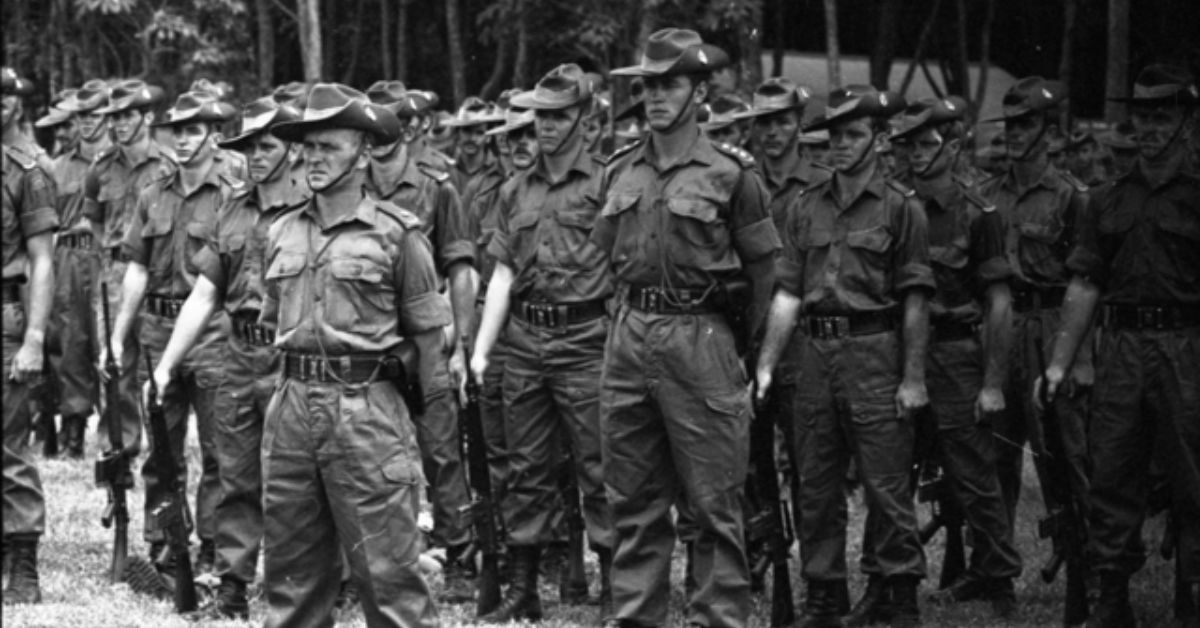
More than a century after the 9th Battalion, Australian Imperial Force, assembled at Bell’s Paddock in Enoggera and marched into history at Gallipoli, the ground beneath Gallipoli Barracks remains one of Queensland’s most significant military sites, carrying a story that reaches directly into the lives of The Gap and Enoggera residents each Anzac Day.
The connection between this stretch of northwest Brisbane and Australia’s defining military moment is not incidental. The 9th Battalion formed at Enoggera near Brisbane and was the first battalion raised in the 3rd Brigade of the 1st Division. When Britain declared war on Germany in August 1914, Queensland answered quickly, and Enoggera became the place where that answer took shape.

From Bell’s Paddock to the Front
The ground now occupied by Gallipoli Barracks has served military purposes since the mid-nineteenth century, but August 1914 marked its most consequential moment. According to a University of Queensland master’s thesis examining the 9th Battalion’s formation, men began arriving at Bell’s Paddock, Enoggera, on 17 and 18 August 1914, pitching tents and beginning to organise. On 21 August, Lieutenant-Colonel H.W. Lee and his fellow officers arrived, and the formal formation of the 9th Battalion AIF began. By early September, the Enoggera camp held the pool from which the battalion’s first contingent was selected.
The thesis challenges the common assumption that the men who landed at Gallipoli were enthusiastic amateurs with little preparation. Instead, it argues that the 9th Battalion drew on decades of prior military development, training, and inherited tradition that began with Queensland colonial volunteer units in 1867, continued through Federation and compulsory training schemes, and culminated in the battalion’s formal raising in 1914. Enoggera was not simply a mustering point but the culmination of this long military lineage. Locals then and now recognise this connection through the 9th’s identity as the “Moreton Regiment,” a title associated with the pre-war militia that formed the backbone of the new battalion.

The 9th served as the first battalion recruited in Queensland and formed part of the 3rd Brigade alongside the 10th, 11th, and 12th Battalions. Authorities raised the battalion within weeks of the declaration of war in August 1914, and it embarked just two months later. Enoggera played a key role in enabling this rapid mobilisation.

First Ashore at Anzac Cove
What followed made the 9th Battalion’s name permanent in Australian military history. The battalion embarked for Gallipoli on the destroyers HMS Queen, Beagle and Colne and was the first ashore at Gallipoli at 4:28am on 25 April 1915. The battalion formed the vanguard of the 3rd Brigade’s covering force and went on to be involved in all major campaigns on the Gallipoli peninsula until the evacuation in December 1915.
Coming ashore early on 25 April 1915 at Anzac Cove, the battalion joined the rest of 3rd Brigade. Lieutenant Duncan Chapman was identified by historian C.E.W. Bean as the first soldier ashore at Gallipoli. The battalion served at Gallipoli until November 1915, then returned to Egypt before sailing to France in March 1916, where it fought through some of the Western Front’s hardest campaigns, including Pozières, Messines, Ypres and the Hindenburg Line, through to the armistice on 11 November 1918.
A Living Legacy in The Gap and Enoggera
The barracks that witnessed those August 1914 formations carries its history in its very name. On Anzac Day, 25 April 1990, the base was renamed Gallipoli Barracks, a direct tribute to the men who assembled there and made that landing. The Gallipoli Barracks are significant as the training ground for thousands of Queenslanders who served in wars throughout the twentieth century, and the site holds local heritage significance under the Brisbane City Plan 2014.


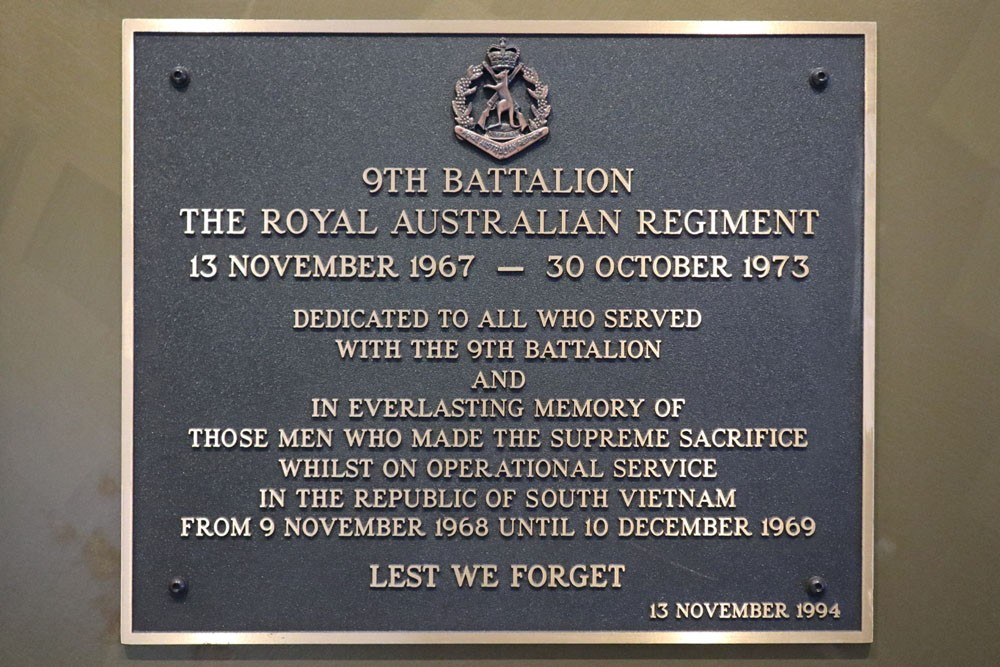
Today the base remains one of Australia’s largest Army installations, home to armoured, artillery, engineer, signals, infantry, medical and other combat service support units. While the 8th/9th Battalion, Royal Australian Regiment (8/9 RAR) carries the tradition within the regular army, the 9th Battalion, Royal Queensland Regiment (9 RQR) also maintains the historic link. As the current reserve unit based at the barracks, 9 RQR keeps the numerical connection to those men who first assembled at Bell’s Paddock alive for a new generation of Queenslanders.
Why This Matters to The Gap and Enoggera
For residents of The Gap and Enoggera, the Anzac story is not something that happened somewhere else. It began here, on the paddocks and training grounds that now sit behind the Gallipoli Barracks gates on their doorstep. The 9th Battalion’s formation in August 1914 drew on men from across Queensland, but it was this specific patch of northwest Brisbane where they came together, trained and prepared for what lay ahead.
Each Anzac Day, that history reasserts itself. The Dawn Service, the Last Post and the roll of honour connect directly to the ground residents walk past every day. For families in The Gap and Enoggera, understanding that the men who were first ashore at Anzac Cove assembled just streets away adds a particular weight to the words “Lest We Forget.”
Anzac Day services in the local area take place on 25 April each year. The Australian War Memorial’s unit record for the 9th Battalion AIF, along with individual service records, are searchable through the National Archives of Australia at naa.gov.au. Further history of the 9th Battalion is held by the 9th Battalions Association at 9bnassoc.org.
Published 27-March-2026.