


Upper Kedron Set for Major Water Upgrade with New Reservoir and Pipelines

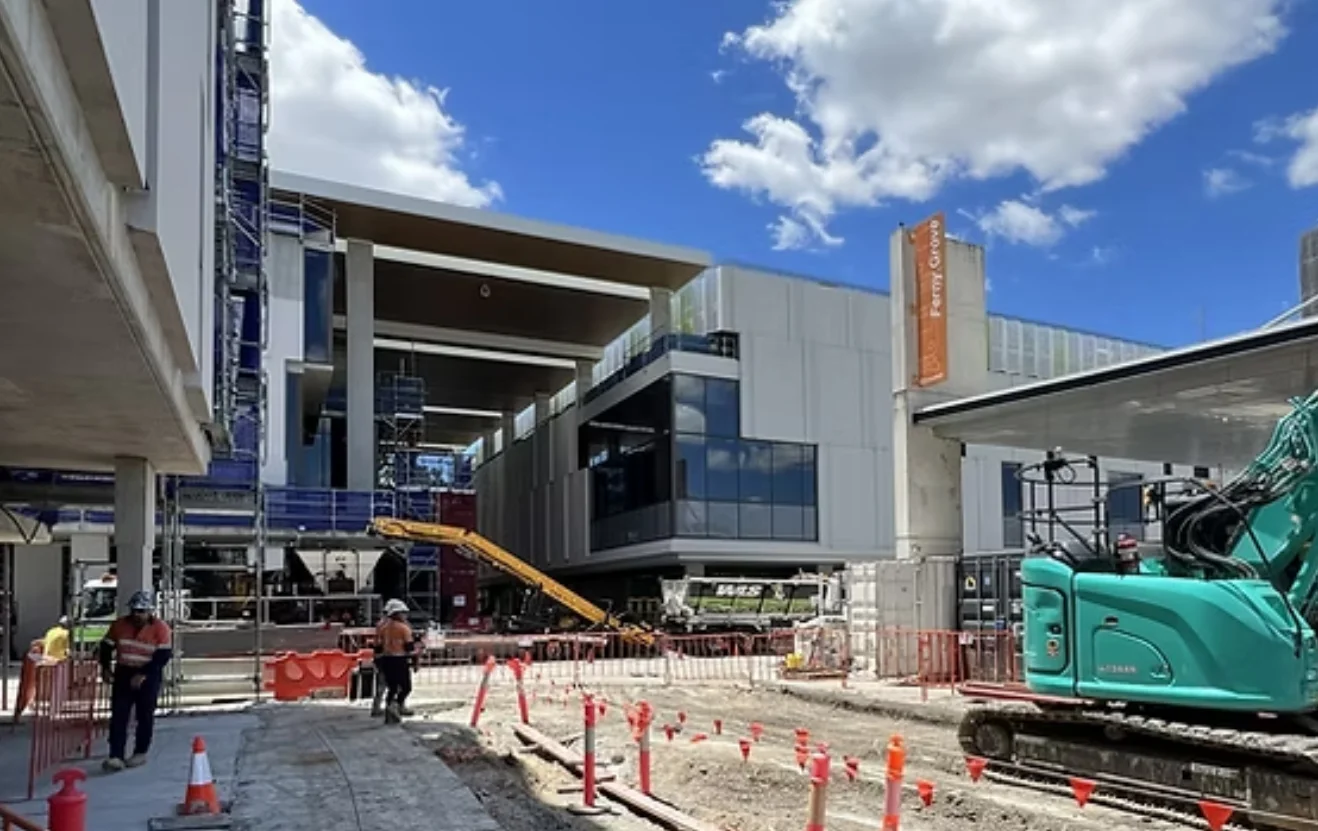
Crews are preparing to dig beneath the streets of Upper Kedron and build new water infrastructure aimed at keeping taps running as more homes move in. The project, led by Pensar, will bring a new reservoir, pumping station and network of underground pipelines into the area, marking one of the largest local upgrades to water supply in recent years.


Construction is scheduled from April 2026 through to late 2027, with work staged across multiple sites.

Pipes beneath roads signal shift in how water moves through Upper Kedron

The project centres on installing underground trunk water mains along key routes, including sections of O’Quinn Road, Levitt Road and Canvey Road. These pipelines will connect to a new reservoir designed to store water and a pumping station that will move it through the network.

According to project information from Pensar’s Upper Kedron project page, most of the construction will take place below ground, with visible activity mainly limited to excavation zones and larger work areas around the reservoir and pump station sites. Temporary compounds at 301 and 383 Levitt Road, as well as the end of Canvey Road, will support equipment storage and site operations as work progresses.

Photo Credit: Pensar

Traffic changes and construction activity expected across local streets

Residents can expect shifting traffic conditions as work moves between locations. Temporary lane closures, reduced speed limits and traffic controllers will be used to manage safety during construction.

Project details indicate that access to homes and businesses will be maintained where possible, though some delays are likely as works move through different stages. Construction will generally take place during daytime hours on weekdays and Saturdays, with occasional out-of-hours work flagged in advance when required.

Managing noise, dust and day-to-day disruption during works

Earthworks and trenching will bring periods of noise, dust and vibration, particularly during early and mid-stage construction. The project team has outlined measures such as dust suppression, monitoring and noise controls to limit impacts beyond work zones.

Information provided by Pensar states that work methods may be adjusted where practical, depending on site conditions and community feedback. Environmental safeguards, including erosion control and waterway protection, are also part of the construction approach.

New infrastructure aims to keep pace with population growth

The upgrade comes as Upper Kedron continues to expand, with new housing increasing demand on existing water systems. The reservoir will provide additional storage capacity, while the pumping station will support consistent pressure and distribution across the suburb.

Project materials show the works are part of forward planning to avoid larger disruptions in the future, as demand for water continues to rise. Once complete, the system will undergo testing before being brought into operation.

Residents encouraged to stay informed as project progresses

The project team has set up a community contact line and email service to handle enquiries and provide updates. Notifications, including letterbox drops and flyers, are expected to be distributed ahead of major construction stages.

Once construction is finished, temporary sites will be removed and affected areas restored, with the new infrastructure forming part of the long-term water network serving Upper Kedron.


Published 29-April-2026

Retirement Village Bid Lodged for Ashgrove Golf Club Site

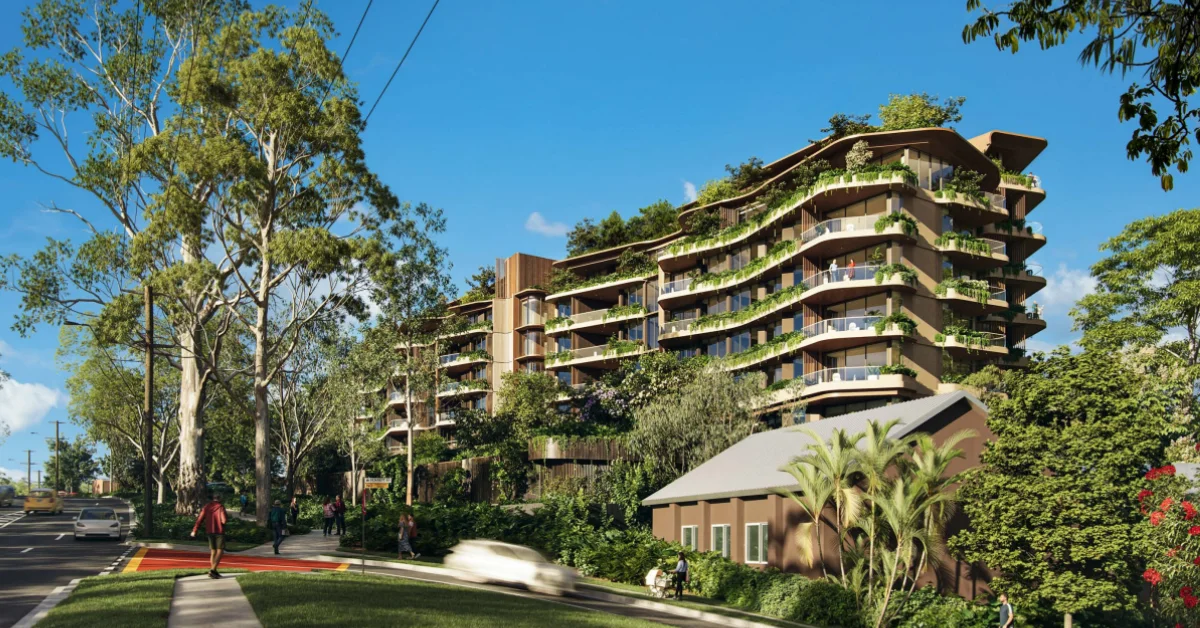
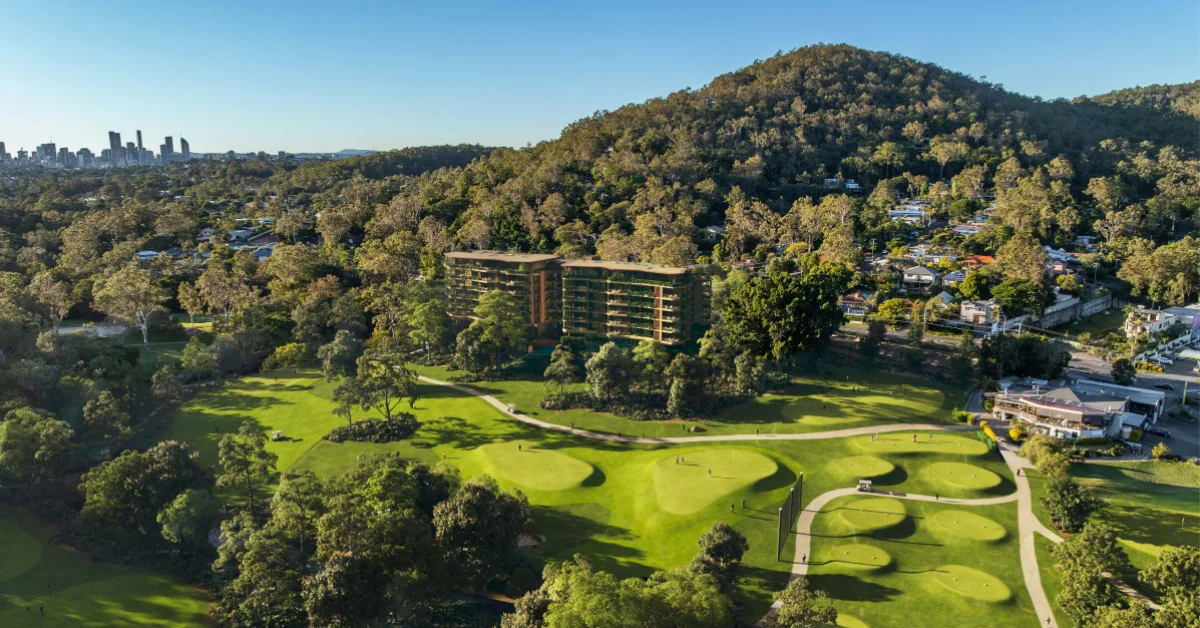
A development application has been lodged to build a retirement living facility on part of the Ashgrove Golf Club’s Waterworks Road site, a move that its proponents say would directly benefit older residents across The Gap and surrounding suburbs.


Read: Hole in one way screws at the Ashgrove Golf Club


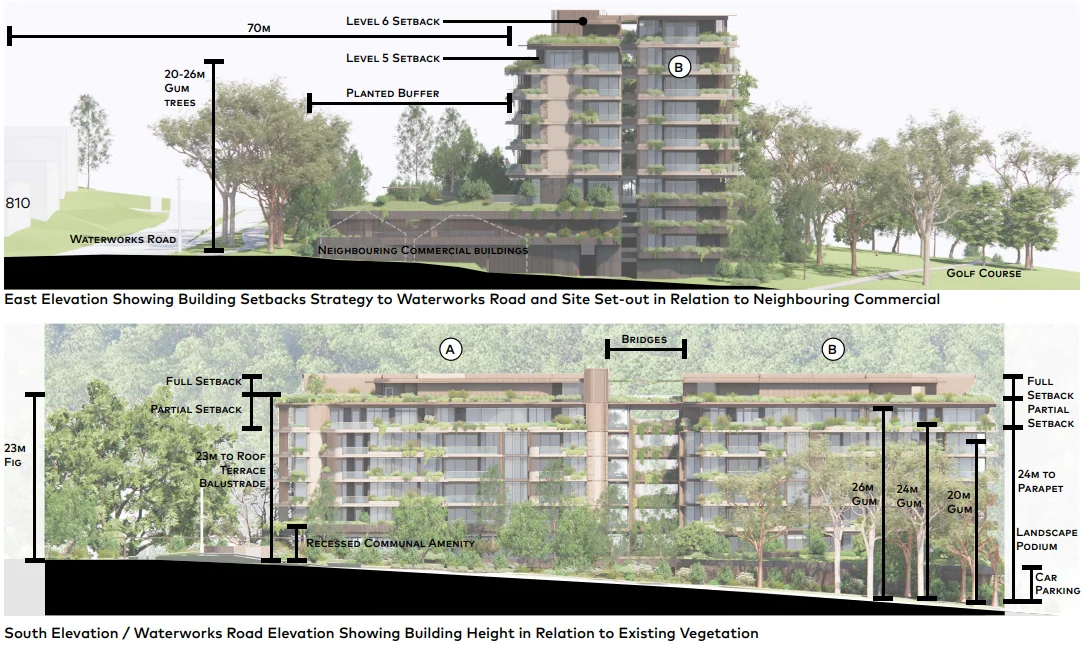
Ashgrove Golf Club and retirement living developer Aura Holdings have jointly submitted an application to Brisbane City, seeking approval for 76 independent living units on a section of the club’s south-eastern corner. The 18-hole golf course would remain intact under the plan.

Ashgrove Golf Club
Photo credit: Cox Architecture/Brisbane PD Online

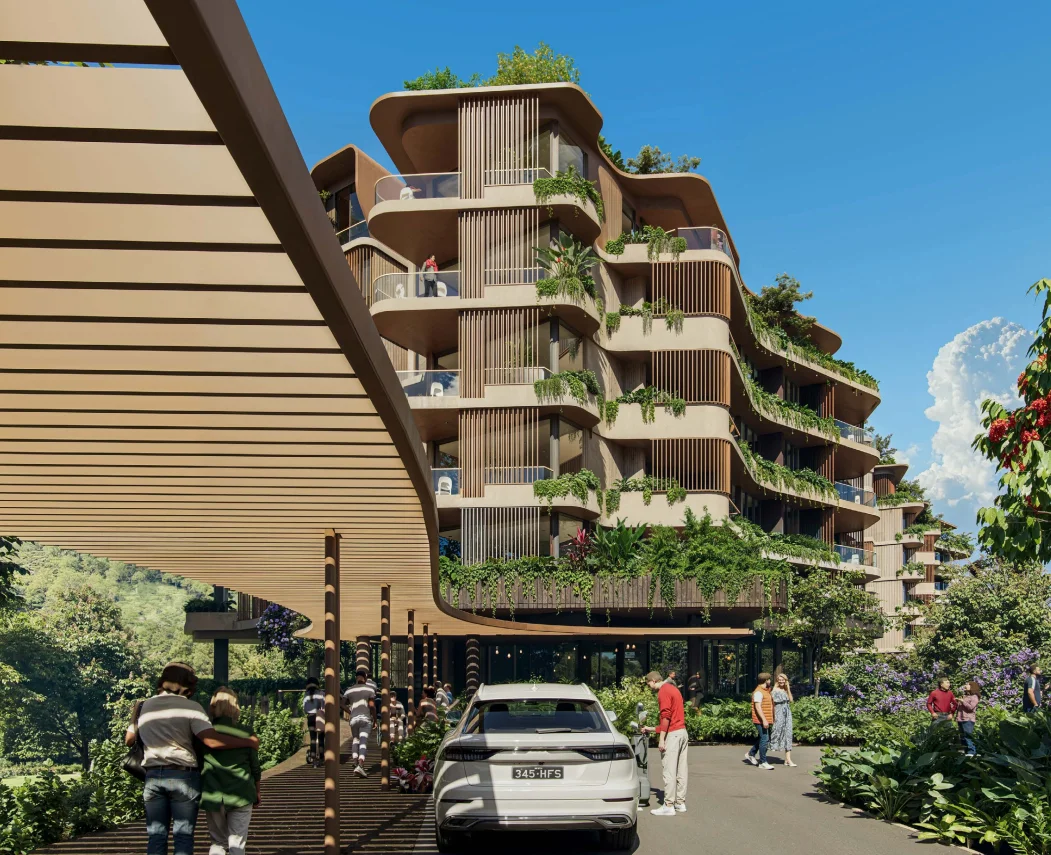
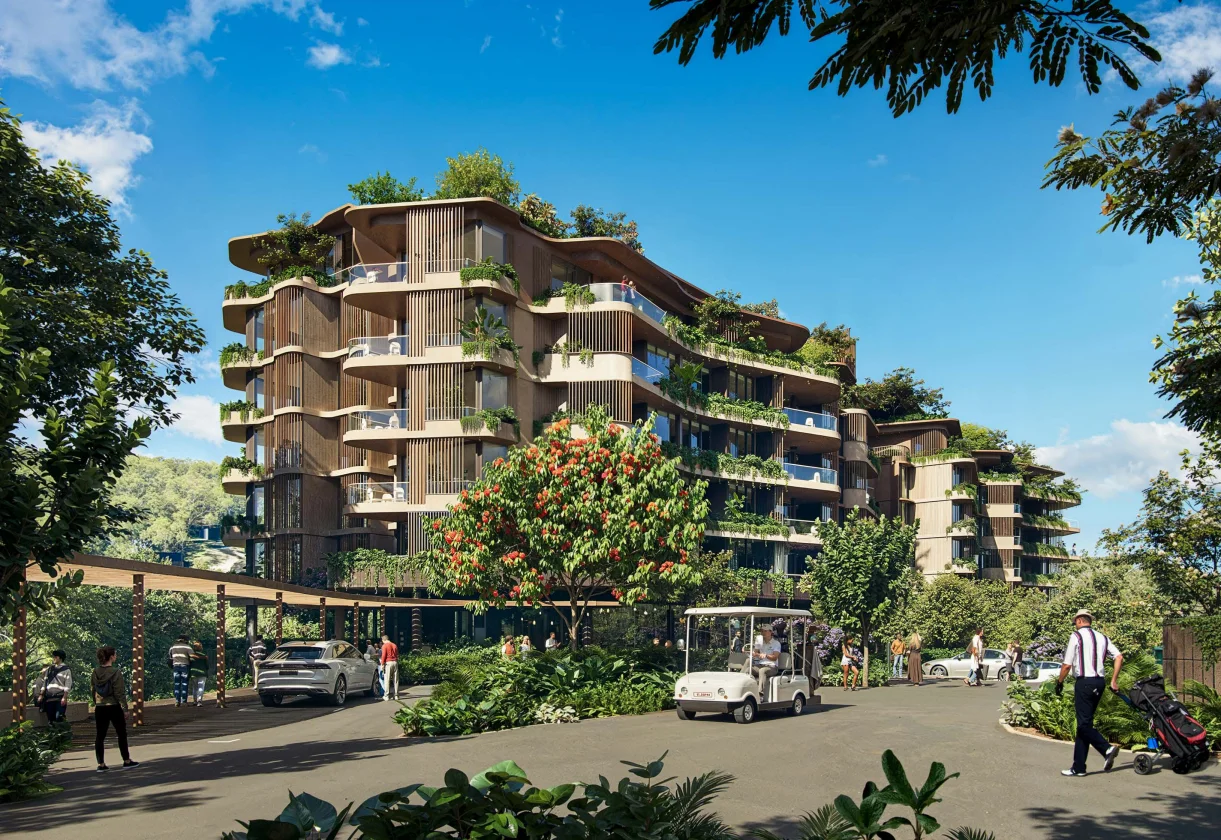
The submission, confirmed by The Gap Ward’s office, proposes two mid-rise residential towers designed by Cox Architecture. The buildings, referred to as Wing A and Wing B, would front Waterworks Road and overlook the course. The unit mix includes 35 two-bedroom and 41 three-bedroom apartments, served by underground and on-grade parking accessed from Waterworks Road.

Photo credit: Cox Architecture/Brisbane PD Online

A market needs assessment included in the application specifically identifies The Gap as part of the primary catchment area for the development. It found that older residents in the area are increasingly living in couple or lone-person households and are looking for smaller, more manageable homes without needing to leave their community. The report concluded the project would contribute positively to housing choice and ageing-in-place outcomes across The Gap and surrounding suburbs.

Photo credit: Cox Architecture/Brisbane PD Online

The independent living model being proposed is aimed at older residents who are ready to downsize but do not yet require full-time care, filling a gap in the local housing market between family homes and aged care facilities. 

Planned resident amenities include a swimming pool, wellness area, bar and billiards room, wine room, rooftop garden, and a private terrace for residents of one of the two buildings.


Read: How an Indoor Golf Venue in Enoggera Is Helping Brisbane Veterans Transition Back to Civilian Life


The club has indicated it intends to keep all 18 holes playable throughout construction, using temporary holes where needed during the course upgrade program.

The application can be viewed using reference number A007011234 on Brisbane City Council’s Development.i portal at developmenti.brisbane.qld.gov.au.  

Published 29-April-2026

How an Indoor Golf Venue in Enoggera Is Helping Brisbane Veterans Transition Back to Civilian Life

For many veterans, the harder story begins after the uniform comes off, in the quiet transition back to civilian life.


Read: Enoggera Golfers Swing into Action for Sick Kids


In Brisbane’s north, two former Defence personnel say they’ve found a source of connection and recovery in X-Golf’s indoor golf facilities in Enoggera, ahead of ANZAC Day on 25 April.

Andrew Murray, 36, served more than 13 years in the infantry before being medically discharged in 2021. Following surgery in late 2024 and ongoing rehabilitation, he says the biggest challenge has not been physical. “I think it’s more of a challenge socially,” he says.

Andrew first picked up golf in 2017 while posted in Wagga Wagga, initially as a way to switch off from work. After leaving the military, he found himself with spare time and a set of clubs, and went looking for somewhere to play. “I was looking for something indoor specifically,” he says. “It’s easier to develop your skills and it’s gentler in terms of injury recovery.”

Photo credit: Facebook/X-Golf Enoggera

That search led him to X-Golf Enoggera. What started as a casual visit became a regular routine, with Andrew now playing several times a week. He has also joined the venue’s weekly X-League competition. “It’s great having the guys there. Going in early and seeing familiar faces really makes a difference to my wellbeing,” he says. Andrew currently works in Defence recruitment.

Jack in action (Photo supplied)

Jack Smith, 35, spent six years in Defence before a back injury sustained during training sidelined him. He says the injury has had a mental impact as well as a physical one. “Once you hurt yourself and it’s significant, it can really take a mental toll. You’ve got to remember that you will get back to that point again, it just takes time,” he says.

Jack was introduced to X-Golf through Defence colleagues and had not played golf seriously before. He says the environment, more than the sport itself, kept him coming back. “I’m more of a recluse, so this really is my social outing,” he says. “I’m pleased to say I’ve found myself a really great community of mates now, and that matters.”


Read: Local Golfers in Enoggera Swing to Grant Five Starlight Wishes


Both men say the indoor format suits their recovery needs, with Andrew specifically noting it is gentler for injury recovery and easier for skill development.

Veterans seeking peer support and transition services can contact Open Arms – Veterans & Families Counselling on 1800 011 046.

Published 22-April-2026

The 300-Year-Old Survivor on Payne Road


Every day, traffic moves steadily along Payne Road in The Gap. Cars line up at the Paten Road roundabout, cyclists pass through, and locals go about their routines. In the middle of this familiar scene stands a tree that many people do not notice at first.


Near the roundabout, a large tallowwood rises above nearby vegetation. Local residents have identified it as a tree that may be more than 300 years old. Online community discussions point to this specific location as home to one of the suburb’s oldest surviving trees. Its presence has become known mainly through word of mouth rather than formal recognition.

Standing at a busy suburban corner

Unlike many notable trees, it is not set within a park or reserve. It grows beside the road, surrounded by traffic, footpaths and homes. Because of its setting, it can blend into the background. However, when viewed more closely, its size becomes clear. Its trunk is thicker than that of the surrounding trees, and its canopy spreads wider, making it stand out once noticed.

The tree is a Eucalyptus microcorys, commonly known as tallowwood. This species is native to eastern Australia and is known for its durability and long lifespan.

Historical records and forestry references indicate that tallowwoods can live for several centuries, with some reaching 400 years or more. They were widely valued for their strong timber, which was used in construction and infrastructure. Because of this, many large specimens were removed during periods of logging.

The Payne Road tree’s age has not been formally verified in public records. However, its size and condition are consistent with older tallowwoods found in other parts of Queensland.

A link to The Gap before development

Before suburban development, The Gap was covered in native forest. Historical accounts describe the area as heavily timbered, with species such as tallowwood forming part of the landscape. During the 19th century, much of this forest was cleared for timber and later for farming.

Local historians note that Payne Road itself dates back to early settlement routes in the area. Over time, farmland gave way to housing and roads, shaping the suburb as it is today.

If the estimated age of the tree is accurate, it would have been growing before these changes began. It would have remained as the surrounding land shifted from forest to cleared ground and eventually to residential streets.

Survival in a landscape shaped by logging

Tallowwood was a valuable resource in early Queensland, often used for structural timber and transport-related construction. As a result, large trees of this species were commonly cut down.

Information from heritage records of similar trees suggests that surviving old tallowwoods were often spared due to location, access challenges or simple oversight. In some cases, their position made them less practical to remove.

There is no confirmed record explaining why the Payne Road tree was left standing. Its survival is likely due to a combination of these factors rather than a single reason.

The tree is not listed as a heritage site in publicly available records. Instead, its recognition comes from local awareness. Community discussions online have identified it as a notable tree within Brisbane, with contributors pointing to its location and age.

Fannings Corner is the local name for the area around the Payne Road–Paten Road intersection in The Gap. Community and environmental groups use the name consistently for bushcare and creek-restoration work in this corner. | Photo Credit: Google Maps

Environmental and community value today

Mature trees such as this one play an important role in suburban environments. Their size allows them to support wildlife, including birds and insects that rely on large canopies and tree hollows.

They also contribute to the character of an area. In established suburbs like The Gap, older trees can provide a sense of continuity as the built environment changes around them.

For those who travel along Payne Road regularly, the tree can be easy to overlook. Its surroundings are busy, and it does not carry signage to draw attention. However, once identified, it becomes a recognisable part of the streetscape. Its height and trunk size set it apart from nearby vegetation.

Still standing through change

The tallowwood on Payne Road has remained in place as the suburb around it has changed over time. From forest to farmland and then to residential streets, it has been part of each stage of that history.

Its continued presence highlights how small parts of the natural landscape can remain even as development expands. While many trees of similar age were removed, this one continues to grow at a busy suburban intersection.


Published 21-April-2026

.

Australian Army Launches New Coastal Force at Gallipoli Barracks, Brisbane

The Australian Army is launching a major new coastal force at Gallipoli Barracks, Brisbane, to fix the gap in the nation’s ability to move troops and heavy gear across its vast northern coastline.


During a ceremonial parade on 31 October 2024, the military formally started the Littoral Manoeuvre Group. This group is the new heart of a plan to make sure the Army can reach remote islands and coastal areas quickly. While the headquarters is staying at Gallipoli Barracks for now, the plan is to spread this power further north. 

Chief of Army Lieutenant General Simon Stuart explained that the group helps the military hold ground and stop others from using the northern paths into Australia. The goal is to make sure that if a challenge pops up in the waters or on the islands near Australia, the Army is ready to respond without delay.

New Tools for Tough Terrain

To make this plan work, the government is moving fast to buy new equipment. The Army is getting medium and heavy landing craft and better ships that can work in shallow water. These vessels are important because they allow the military to carry big items like Abrams tanks and heavy weapons onto beaches where there are no docks. 

By bringing together different specialist teams into one group, the Army hopes to make their work much smoother. This change helps different parts of the military talk to each other better and move as one team under the 17th Sustainment Brigade.

Training the Next Generation

A big part of this new group is the people behind the machines. Colonel Rory Hale noted that the Army is creating a special team of soldiers who are experts at working where the land meets the sea. They are working closely with the Navy and local TAFE colleges to teach these soldiers the specific skills they need for maritime life. 

This creates new jobs and career paths for people who want to serve their country in a different way. By focusing on training, the Army is trying to build a group of confident coastal experts who can handle the difficult environment of the Indo-Pacific region.


Spreading Strength Across the North

While Brisbane is the starting point, the footprint of this new force will soon grow much larger. New groups of soldiers and landing craft will be stationed in the Northern Territory and North Queensland. Placing these units right next to existing combat brigades means the Army can move much faster during an emergency. This setup is designed to help keep the northern approaches to Australia safe and ensure that the military can stay in one spot for as long as they are needed to protect the region.

Published Date 06-April-2026

New Two-Storey Childcare Centre Proposed for Waterworks Road to Meet Growing Demand in The Gap

A development application lodged in February 2026 proposes a new two-storey childcare centre on Waterworks Road in The Gap, designed by Raunik Design Group to accommodate up to 100 children across six activity rooms on a 2,551-square-metre site adjacent to The Gap State School.


The application, reference A006964015, involves the demolition of two existing dwelling houses to make way for the purpose-built early learning facility. It arrives as The Gap continues to face one of the tightest childcare supply situations of any suburb in Brisbane, with independently verified data showing the suburb’s demand for long day care places running significantly above the metropolitan average.

A Suburb with a Real Childcare Shortage

The case for additional childcare capacity in The Gap is well supported by supply and demand data. The Gap currently has 2.4 resident children under five years of age per long day care place, a figure significantly higher than the 1.7 children per place recorded across Greater Brisbane as a whole. Put plainly, The Gap has considerably fewer childcare places per child than the Brisbane average, and that gap directly affects families trying to access care, particularly for children under two where demand is most acute.

Site of the proposed childcare centre
Photo Credit: DA A006964015

As of early 2025, The Gap had five long day care centres providing 350 places across the suburb, serving a population estimated at 18,071 residents, of whom approximately 854 are children under five years of age. The Waterworks Road proposal, if approved, would add 100 licensed places to that supply, representing a meaningful increase of roughly 28 per cent in the suburb’s long day care capacity.

The timing is also relevant. From January 2026, changes to the national Child Care Subsidy introduced the Three Day Guarantee, which provides all eligible families with a minimum of 72 hours of subsidised care per fortnight regardless of their work or activity status. That change increases demand further without adding supply, making new facilities like the Waterworks Road proposal more important to The Gap’s community infrastructure than ever.

What the Development Proposes

The proposed childcare centre sits on a combined site currently comprising two residential lots on Waterworks Road, directly adjacent to The Gap State School. The development covers a gross floor area of 918.4 square metres across two storeys, with a maximum building height of approximately 9.5 metres and a site cover of 35.3 per cent of the 2,551-square-metre block.

Photo Credit: DA A006964015

The building delivers six internal activity rooms, each with direct access to outdoor play areas, creating the indoor-outdoor learning environment that contemporary early childhood education frameworks emphasise. Three outdoor play areas totalling 737.8 square metres are distributed across both ground and first floor levels, giving different age groups independent access to outdoor space throughout the day. Acoustic treatments are incorporated into the design to minimise noise impacts on neighbouring properties, reflecting the site’s position within a Low Density Residential zone.

Car parking provides 21 spaces including a PWD space and a van space, all contained onsite and accessed via a single crossover from Waterworks Road. Operating hours are proposed as 6:30am to 6:30pm Monday to Friday.

Photo Credit: DA A006964015

Application planners Place Creation describe the building’s design intent as delivering a high degree of architectural merit, with articulation in built form addressing both the Waterworks Road frontage and the adjacent school. The design uses a range of materials alongside varied setbacks, overhangs and a varied roof form to minimise the apparent bulk and scale of the building when viewed from neighbouring properties.

Addressing Local Childcare Demand

For families across The Gap, Keperra, Walkervale and the surrounding northwest Brisbane corridor, the addition of 100 new childcare places on Waterworks Road addresses a real and persistent pressure. The suburb’s family demographic, its distance from the CBD and its limited public transport connections make local childcare access particularly important. Parents who cannot secure a place near home face significant logistical challenges, and the suburb’s above-average childcare demand ratio means waitlists at existing centres in The Gap regularly extend well beyond what most families can plan around.

The Waterworks Road site’s adjacency to The Gap State School also creates a practical convenience for families managing both childcare and school-aged children at the same address, a combination that reduces the complexity of the morning and afternoon care and school run for working parents.

How to Make a Submission

The development application for the Waterworks Road childcare centre is available for public review on the Development.i portal at developmenti.brisbane.qld.gov.au using reference A006964015. Community members, neighbours and interested residents can view the full application documents and lodge a properly made submission during the public notification period.

A properly made submission must be in writing, include the submitter’s name and contact address, clearly identify the application it relates to, and set out the grounds for the submission with supporting facts and circumstances. Submissions can be lodged through the Development.i portal or in writing to BCC.


Published 28-March-2026.

Keperra Bowl Doubles Up: Oberle Defends Title, Harris Claims Women’s Crown

The Keperra Bowl produced two commanding performances this week, with Brisbane golfer Chase Oberle defending his men’s title and Victorian teenager Amelia Harris claiming the women’s crown at Keperra Country Golf Club — a fitting showcase for one of the most storied venues in Queensland amateur golf.


Oberle, 18, was in a class of his own across the 72-hole stroke play championship, finishing at 21-under par with rounds of 67, 70, 65 and 65. He carried a three-shot buffer into the final day and extended it significantly, ultimately winning by nine strokes over runner-up Taylor Barr, who finished at 12-under. It wasn’t the first time Oberle had put on a show at this course — he also won last year’s edition, finishing 21-under in that edition as well. Back-to-back Keperra Bowl titles for a player still in his teens is no small achievement at a tournament that has drawn serious amateur talent for decades.

The Brisbane native is currently ranked 248th in the AmateurGolf.com world amateur rankings and is heading to the University of Notre Dame later this year. His victory here adds to an already strong 2026 that includes a tied-sixth finish at the Riversdale Cup. In 2025, he also won the Queensland Junior Amateur alongside the Keperra Bowl, making this latest title a continuation of a remarkable run of form at the local level.

Jonty Lunson finished third overall at 211 for his final three rounds, with Hamish Farquharson and Max Moring sharing fourth place.

In the women’s competition, Harris was equally dominant. The 17-year-old Victorian posted rounds of 66, 67, 72 and 71 to finish at 12-under par — four strokes ahead of runner-up Alicia Ludi, who closed at 8-under. Harris, who is set to join the University of South Carolina later in 2026, has been in outstanding form this season. She recently secured a win at the Rene Erichsen Salver and claimed the final Women’s NSW Open regional qualifier before adding this title to her growing list of results.

For those unfamiliar with the Keperra Bowl’s significance on the national amateur calendar, it’s worth a bit of context. The event is held at Keperra Country Golf Club, which was established in 1931 and is nestled at the foot of the Taylor Range, just 15 minutes from Brisbane’s CBD. The club has a long tradition of producing elite golfers, including professionals John Senden, Peter Senior, and Jeff Woodland. Over the years, golfing legends Jack Nicklaus, Gary Player, Jason Day, Cameron Smith, Marc Leishman and Adam Scott have all played the course. The Keperra Bowl itself is a 72-hole stroke play event conducted by Keperra Country Golf Club in partnership with Golf Queensland, and it is open to male players of all ages, with a cut applied after 36 holes.


For the local Keperra community, this week’s results offer a reason to celebrate. The suburb’s golf club continues to punch well above its weight on the national amateur stage, and the performances of Oberle and Harris are a reminder of the quality this tournament consistently attracts.

Published 27-March-2026

Enoggera’s Gallipoli Barracks and the 9th Battalion’s Road to Anzac Cove

More than a century after the 9th Battalion, Australian Imperial Force, assembled at Bell’s Paddock in Enoggera and marched into history at Gallipoli, the ground beneath Gallipoli Barracks remains one of Queensland’s most significant military sites, carrying a story that reaches directly into the lives of The Gap and Enoggera residents each Anzac Day.


The connection between this stretch of northwest Brisbane and Australia’s defining military moment is not incidental. The 9th Battalion formed at Enoggera near Brisbane and was the first battalion raised in the 3rd Brigade of the 1st Division. When Britain declared war on Germany in August 1914, Queensland answered quickly, and Enoggera became the place where that answer took shape.

From Bell’s Paddock to the Front

The ground now occupied by Gallipoli Barracks has served military purposes since the mid-nineteenth century, but August 1914 marked its most consequential moment. According to a University of Queensland master’s thesis examining the 9th Battalion’s formation, men began arriving at Bell’s Paddock, Enoggera, on 17 and 18 August 1914, pitching tents and beginning to organise. On 21 August, Lieutenant-Colonel H.W. Lee and his fellow officers arrived, and the formal formation of the 9th Battalion AIF began. By early September, the Enoggera camp held the pool from which the battalion’s first contingent was selected.

The thesis challenges the common assumption that the men who landed at Gallipoli were enthusiastic amateurs with little preparation. Instead, it argues that the 9th Battalion drew on decades of prior military development, training, and inherited tradition that began with Queensland colonial volunteer units in 1867, continued through Federation and compulsory training schemes, and culminated in the battalion’s formal raising in 1914. Enoggera was not simply a mustering point but the culmination of this long military lineage. Locals then and now recognise this connection through the 9th’s identity as the “Moreton Regiment,” a title associated with the pre-war militia that formed the backbone of the new battalion.

The 9th served as the first battalion recruited in Queensland and formed part of the 3rd Brigade alongside the 10th, 11th, and 12th Battalions. Authorities raised the battalion within weeks of the declaration of war in August 1914, and it embarked just two months later. Enoggera played a key role in enabling this rapid mobilisation.

First Ashore at Anzac Cove

What followed made the 9th Battalion’s name permanent in Australian military history. The battalion embarked for Gallipoli on the destroyers HMS Queen, Beagle and Colne and was the first ashore at Gallipoli at 4:28am on 25 April 1915. The battalion formed the vanguard of the 3rd Brigade’s covering force and went on to be involved in all major campaigns on the Gallipoli peninsula until the evacuation in December 1915.

Coming ashore early on 25 April 1915 at Anzac Cove, the battalion joined the rest of 3rd Brigade. Lieutenant Duncan Chapman was identified by historian C.E.W. Bean as the first soldier ashore at Gallipoli. The battalion served at Gallipoli until November 1915, then returned to Egypt before sailing to France in March 1916, where it fought through some of the Western Front’s hardest campaigns, including Pozières, Messines, Ypres and the Hindenburg Line, through to the armistice on 11 November 1918.

A Living Legacy in The Gap and Enoggera

The barracks that witnessed those August 1914 formations carries its history in its very name. On Anzac Day, 25 April 1990, the base was renamed Gallipoli Barracks, a direct tribute to the men who assembled there and made that landing. The Gallipoli Barracks are significant as the training ground for thousands of Queenslanders who served in wars throughout the twentieth century, and the site holds local heritage significance under the Brisbane City Plan 2014.

Photo Credit: Anzac Square

Today the base remains one of Australia’s largest Army installations, home to armoured, artillery, engineer, signals, infantry, medical and other combat service support units. While the 8th/9th Battalion, Royal Australian Regiment (8/9 RAR) carries the tradition within the regular army, the 9th Battalion, Royal Queensland Regiment (9 RQR) also maintains the historic link. As the current reserve unit based at the barracks, 9 RQR keeps the numerical connection to those men who first assembled at Bell’s Paddock alive for a new generation of Queenslanders.

More Than History, It Happened Here

For residents of The Gap and Enoggera, the Anzac story is not something that happened somewhere else. It began here, on the paddocks and training grounds that now sit behind the Gallipoli Barracks gates on their doorstep. The 9th Battalion’s formation in August 1914 drew on men from across Queensland, but it was this specific patch of northwest Brisbane where they came together, trained and prepared for what lay ahead.

Each Anzac Day, that history reasserts itself. The Dawn Service, the Last Post and the roll of honour connect directly to the ground residents walk past every day. For families in The Gap and Enoggera, understanding that the men who were first ashore at Anzac Cove assembled just streets away adds a particular weight to the words “Lest We Forget.”

Anzac Day services in the local area take place on 25 April each year. The Australian War Memorial’s unit record for the 9th Battalion AIF, along with individual service records, are searchable through the National Archives of Australia at naa.gov.au. Further history of the 9th Battalion is held by the 9th Battalions Association at 9bnassoc.org.


Published 27-March-2026.

Enoggera Joins Brisbane’s Knockdown Rebuild Trend With Standout Mittagong Street Sale

Brisbane’s established middle ring suburbs are quietly being transformed, one new build at a time, and Enoggera is the latest suburb to show just how far that shift has gone. The sale of a brand new five-bedroom residence at 30 Mittagong Street for $3,295,000 is a clear signal of growing buyer appetite for quality new homes in established neighbourhoods.


Read: 8 Things You Might Not Know About the Enoggera Reservoir


Dubbed Montana by its marketers, the home sits on a 759 square metre block and was completed in 2024. It was sold by SpinksCo Residential, reflecting the premium now being placed on quality new builds in the area.

Mittagong Street
30 Mittagong Street before the rebuild (Photo credit: Google Street View)

The residence itself is a study in contemporary family living. Five bedrooms, three bathrooms and two car spaces are wrapped in a layout designed for both everyday comfort and entertaining. 

Mittagong Street
Photo credit: SpinksCo Residential

A chef’s kitchen anchors the open plan living and dining area, which opens through full height glass sliders to an alfresco terrace. Outside, a fully equipped outdoor kitchen, in ground pool, poolside pavilion and level lawn complete what the listing describes as a resort style backyard. Upstairs, a secondary living space and study nook offer breathing room for older children, while the ground floor fifth bedroom with its own ensuite works equally well for extended family or guests.

Photo credit: SpinksCo Residential

The property sits within the catchments for Oakleigh State School and Everton Park State High School, and is close to several private schools including Hillbrook Anglican School and Mt Maria College. The Brisbane CBD is less than seven kilometres away.

That combination of school catchments, block size and proximity to the city is precisely what industry analysts have identified as the recipe driving knockdown rebuild activity across Brisbane’s middle ring. A recent Place Advisory review found that suburbs fitting this profile, large blocks between 10 and 20 kilometres of the CBD in established school catchments, are attracting a new generation of architecturally ambitious new builds as vacant land closer to the city becomes increasingly scarce.

Place Ascot agent Drew Davies, who has observed the trend closely across Brisbane’s north and middle ring, says the shift is less about building bigger and more about building better. He says boutique, family backed projects are bringing a level of craftsmanship to suburban streetscapes that is increasingly competitive with what traditional developers produce.

RSM Australia national real estate lead and taxation lawyer Adam Crowley says the people pursuing these projects are no longer just from the building trades. Doctors, surgeons and professionals across a range of fields are now asking the same questions about whether to renovate, rebuild or subdivide, and Crowley says the enquiries keep coming. His consistent message to all of them is to get proper tax and structuring advice before committing, particularly around GST, capital gains tax and the limits of the main residence exemption, which can catch even well prepared owners off guard.


Read: The Gap Home Among Eight Brisbane Properties Facing Forced Auction Over Unpaid Rates


For Enoggera residents, the Mittagong Street result is a marker worth paying attention to. This property has demonstrated the land, the catchments and the location that buyers are willing to pay a premium for. If the broader Brisbane trend is any guide, it will not be the last result of its kind.

Published 17-March-2026

Helping Hands: WWI Army Masseuse from The Gap

A masseuse is not the first image that comes to mind when Australians remember the First World War. Yet one of the war effort’s most unusual roles was filled by a woman from The Gap. Pearl Constance Paten was one of only 29 women deployed overseas with the Australian Army Massage Service, using skilled hands to help injured Anzac soldiers begin the long road to recovery.

Anzac Day series

Who was Pearl?

Born on 3 November 1884 at “Walton” House at The Gap, Pearl was one of only 29 women deployed overseas as part of the Australian Army Massage Service during WWI. It is a distinction that has gone largely unrecognised for more than a century, yet her contribution, and that of the small, determined band of women who served alongside her, helped lay the foundations for what we now know as physiotherapy.


Read: Stan the Ram’s Legacy Lives On at Enoggera This ANZAC Day


Pearl Constance Paten
Walton (Photo credit: The Gap Historical Society)

Pearl’s father Jesse Paten was a self-made immigrant who built a farming and business empire spanning more than 500 acres at The Gap. The family of ten children punched well above its weight.

Pearl’s youngest sister Winifred became Queensland’s first female graduate barrister. Her sister Eunice was among the first four Queensland nurses sent overseas, eventually being awarded the Royal Red Cross (2nd Class) for her service at Alexandria and on the Western Front.

Her brother Edward, the youngest of the Paten children, enlisted in December 1915 with the 49th Battalion and was killed by shellfire near Warneton, Belgium, in July 1917. He was 21 years old.

Even eldest sister May served on the home front, driving injured soldiers from railway stations and ports to hospitals as part of the Royal Australian Automobile Club of Queensland Transport Corps.

Pearl Constance Paten
Photo credit: Biographical record of Queensland women, State Library of Queensland.

Massage: Her War Calling

Pearl’s own path into the war effort began long before the guns started firing. In 1902, she sat the entrance exams for the University of Sydney, at the time one of the only institutions in Australia offering formal training in massage. She returned to Brisbane, established herself in practice, including at a clinic on George Street in the city, and became an active member of the Australian Massage Association (AMA).

When war broke out, the AMA wasted no time lobbying for massage therapy to be formally incorporated into military medicine, including as a treatment for shell shock. That campaign paid off. In November 1915, the Australian Army Massage Reserve (AAMR) was established, and Pearl was among its founding members. The work was far from easy. Masseuses routinely saw between 30 and 40 patients a day. Treatments were physically demanding, involving muscle manipulation, hot baths and electrotherapy.

First four Queensland nurses selected for the Australian Army Nursing Service, 1914. (Photo credit: John Oxley Library, State Library of Queensland, Negative number: 189830)

There was a social battle to fight too. At the outset, many military hospitals were reluctant to employ female masseuses, considering it improper for women to place their hands on male patients. Pearl and her colleagues proved those objections wrong, day after day, through sheer competence and professionalism.

In late 1918, after the Armistice, Pearl was posted to the 14th Australian General Hospital in Egypt, where she served from 28 November until Christmas Day. Her primary purpose appears to have been accompanying the hospital ship HMAT Nestor back to Australia, providing rehabilitation treatment to wounded soldiers during the long voyage home. On board, she was reunited with her sister Eunice, who served as sister-in-charge. When the ship arrived in Brisbane, both women were placed in quarantine at Lytton due to the Spanish Flu outbreak.

Service Records Pearl Constance Paten (Photo credit: National Archives of Australia, Item ID 8010122)

The war may have ended, but Pearl’s work was far from over. Appointed head masseuse at Rosemount Military Hospital in Windsor, she arrived to find conditions that were, frankly, a scandal. The massage ward was not yet finished when patients began arriving. With upwards of 250 patients and just ten masseuses on staff, the department was overwhelmed.

One patient was so incensed he wrote to a local newspaper in June 1919, saying it was only because of Pearl’s “devotion to duty” and her love for her wounded men that the department was functioning at all. The situation drew sustained media coverage and was publicly described as a “disgrace to State.” A new orthopaedic wing with a dedicated massage ward eventually opened by the end of 1919.


Read: Anzac Day: Big crowds expected as Queenslanders turn out to remember fallen


Photo credit: The Gap Historical Society

Pearl married Captain Charles William Scott French in 1923, and the couple built their home “Tula” on the same land as her childhood home at The Gap, a fitting full circle for a woman whose story is so deeply rooted in this community. She remained active in the Australian Masseuses Association and in organisations supporting Queensland war nurses for years afterwards.

This Anzac Day, as wreaths are laid and bugles sound across the country, spare a thought for Pearl Paten, a daughter of The Gap who served her country not with a rifle, but with trained hands and an unshakeable sense of duty.

Published 17-March-2026