



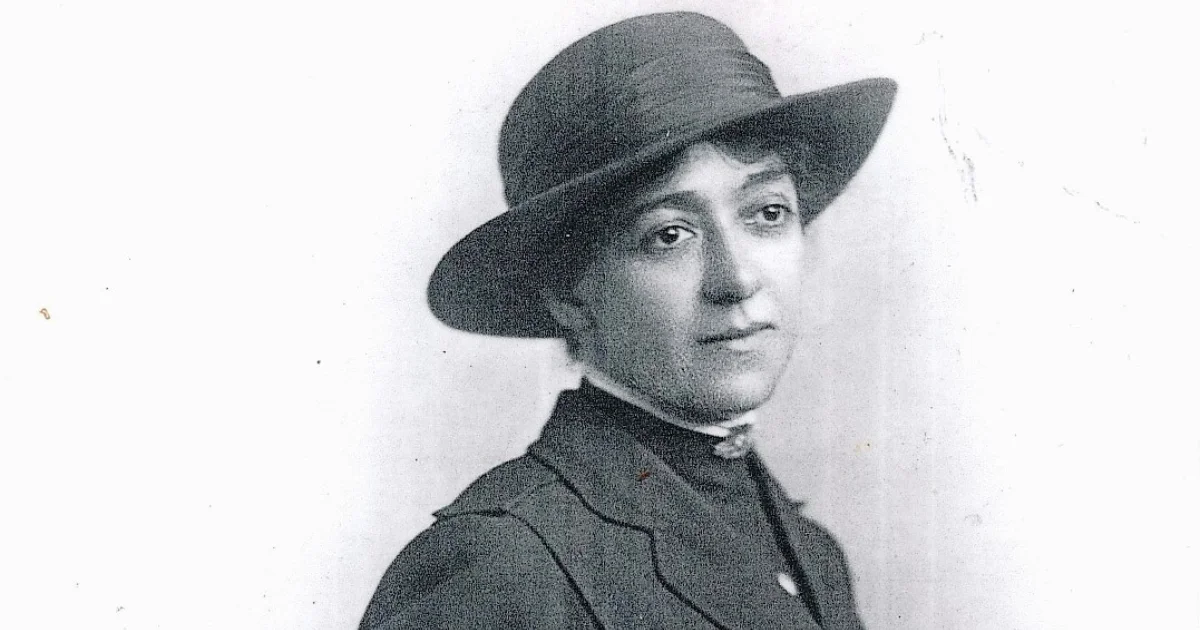
A masseuse is not the first image that comes to mind when Australians remember the First World War. Yet one of the war effort’s most unusual roles was filled by a woman from The Gap. Pearl Constance Paten was one of only 29 women deployed overseas with the Australian Army Massage Service, using skilled hands to help injured Anzac soldiers begin the long road to recovery.
Who was Pearl?
Born on 3 November 1884 at “Walton” House at The Gap, Pearl was one of only 29 women deployed overseas as part of the Australian Army Massage Service during WWI. It is a distinction that has gone largely unrecognised for more than a century, yet her contribution, and that of the small, determined band of women who served alongside her, helped lay the foundations for what we now know as physiotherapy.
Read: Stan the Ram’s Legacy Lives On at Enoggera This ANZAC Day

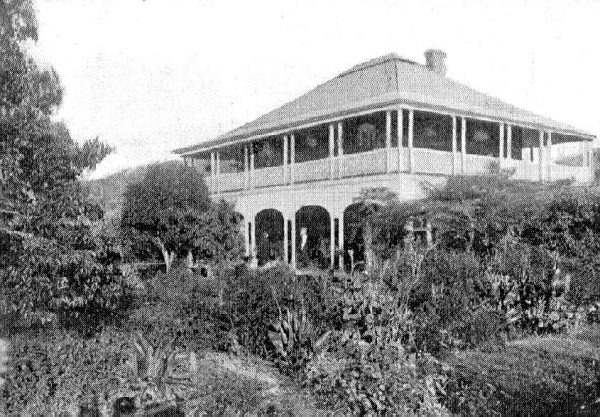
Pearl’s father Jesse Paten was a self-made immigrant who built a farming and business empire spanning more than 500 acres at The Gap. The family of ten children punched well above its weight.
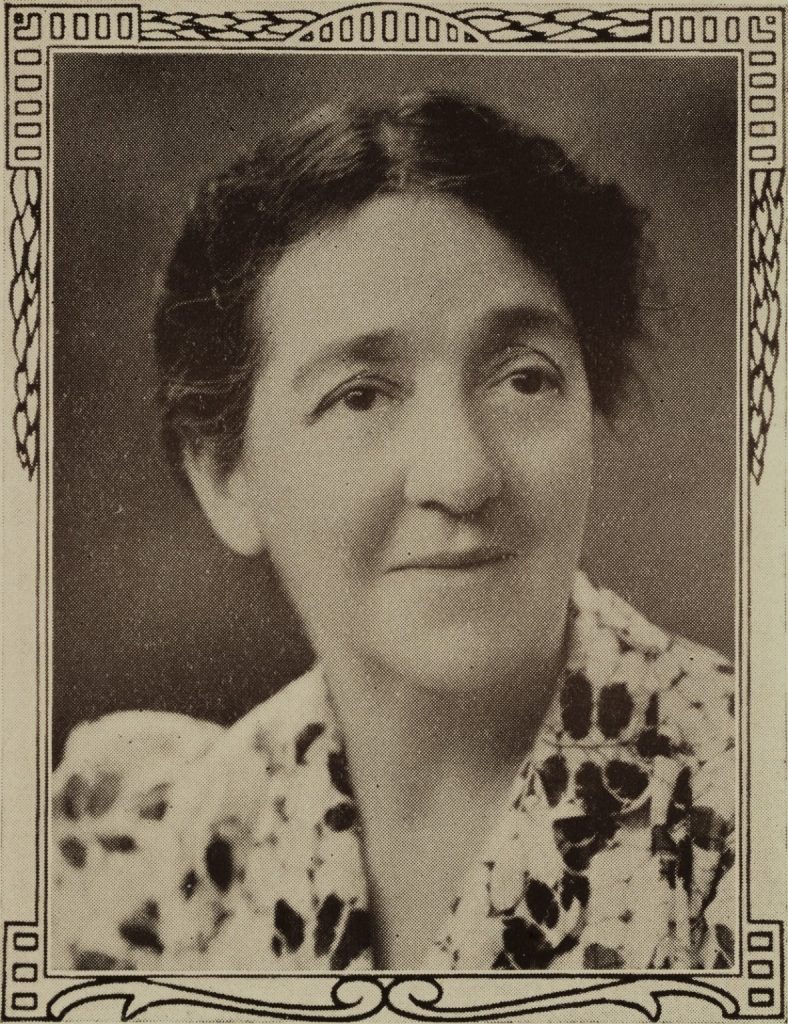
Pearl’s youngest sister Winifred became Queensland’s first female graduate barrister. Her sister Eunice was among the first four Queensland nurses sent overseas, eventually being awarded the Royal Red Cross (2nd Class) for her service at Alexandria and on the Western Front.

Her brother Edward, the youngest of the Paten children, enlisted in December 1915 with the 49th Battalion and was killed by shellfire near Warneton, Belgium, in July 1917. He was 21 years old.

Even eldest sister May served on the home front, driving injured soldiers from railway stations and ports to hospitals as part of the Royal Australian Automobile Club of Queensland Transport Corps.
Massage: Her War Calling
Pearl’s own path into the war effort began long before the guns started firing. In 1902, she sat the entrance exams for the University of Sydney, at the time one of the only institutions in Australia offering formal training in massage. She returned to Brisbane, established herself in practice, including at a clinic on George Street in the city, and became an active member of the Australian Massage Association (AMA).
When war broke out, the AMA wasted no time lobbying for massage therapy to be formally incorporated into military medicine, including as a treatment for shell shock. That campaign paid off. In November 1915, the Australian Army Massage Reserve (AAMR) was established, and Pearl was among its founding members. The work was far from easy. Masseuses routinely saw between 30 and 40 patients a day. Treatments were physically demanding, involving muscle manipulation, hot baths and electrotherapy.



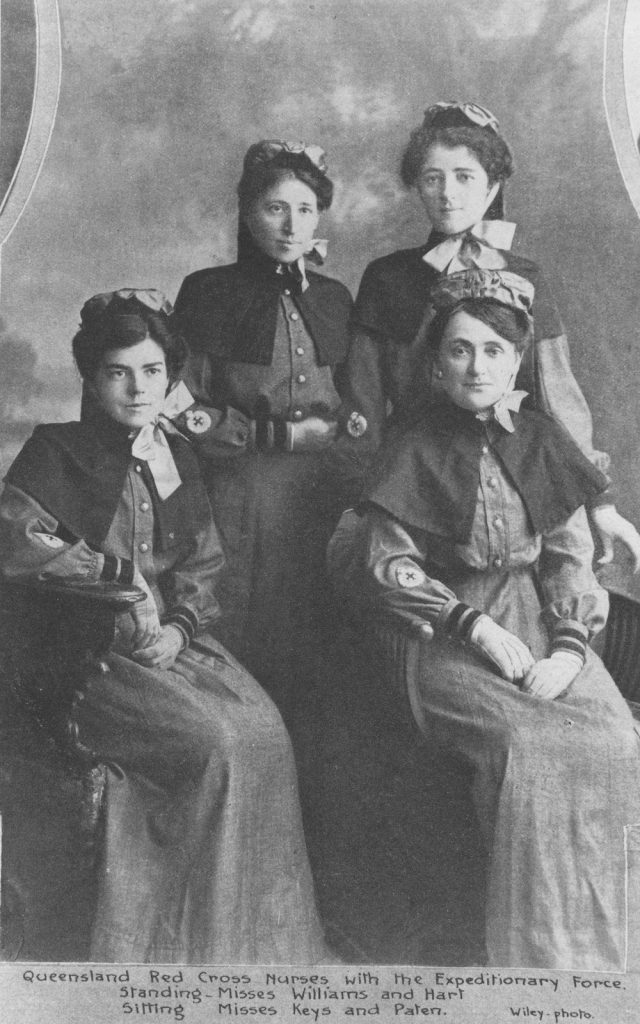
There was a social battle to fight too. At the outset, many military hospitals were reluctant to employ female masseuses, considering it improper for women to place their hands on male patients. Pearl and her colleagues proved those objections wrong, day after day, through sheer competence and professionalism.
In late 1918, after the Armistice, Pearl was posted to the 14th Australian General Hospital in Egypt, where she served from 28 November until Christmas Day. Her primary purpose appears to have been accompanying the hospital ship HMAT Nestor back to Australia, providing rehabilitation treatment to wounded soldiers during the long voyage home. On board, she was reunited with her sister Eunice, who served as sister-in-charge. When the ship arrived in Brisbane, both women were placed in quarantine at Lytton due to the Spanish Flu outbreak.
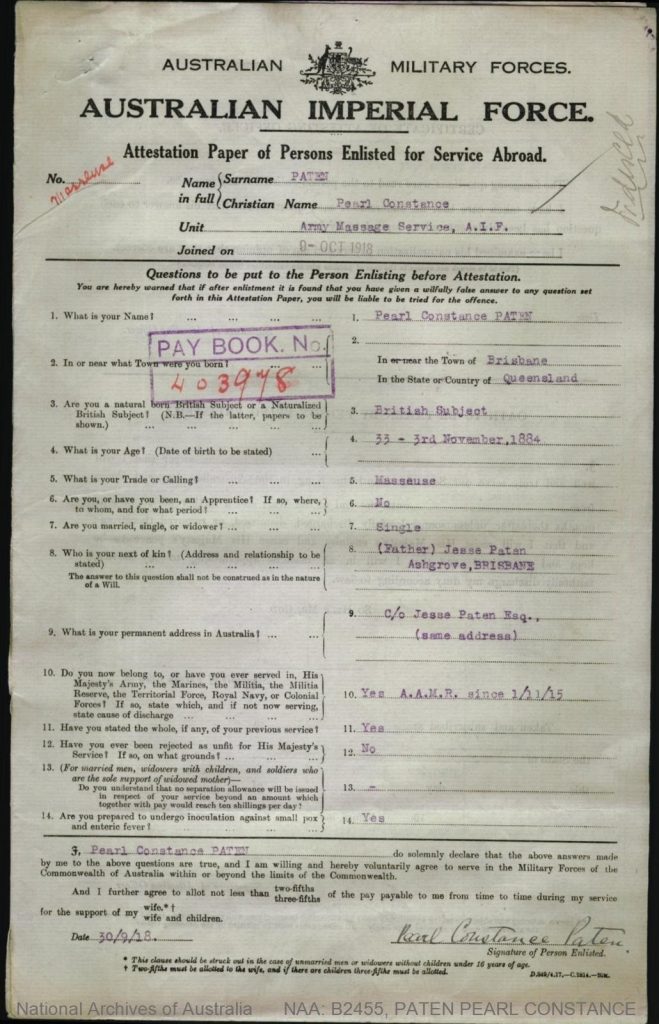
The war may have ended, but Pearl’s work was far from over. Appointed head masseuse at Rosemount Military Hospital in Windsor, she arrived to find conditions that were, frankly, a scandal. The massage ward was not yet finished when patients began arriving. With upwards of 250 patients and just ten masseuses on staff, the department was overwhelmed.
One patient was so incensed he wrote to a local newspaper in June 1919, saying it was only because of Pearl’s “devotion to duty” and her love for her wounded men that the department was functioning at all. The situation drew sustained media coverage and was publicly described as a “disgrace to State.” A new orthopaedic wing with a dedicated massage ward eventually opened by the end of 1919.
Read: Anzac Day: Big crowds expected as Queenslanders turn out to remember fallen
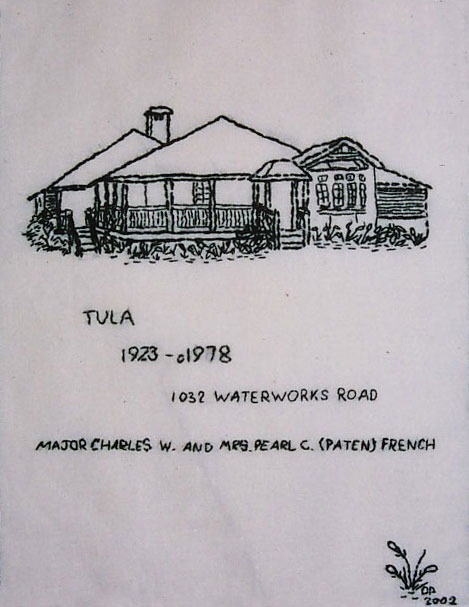
Pearl married Captain Charles William Scott French in 1923, and the couple built their home “Tula” on the same land as her childhood home at The Gap, a fitting full circle for a woman whose story is so deeply rooted in this community. She remained active in the Australian Masseuses Association and in organisations supporting Queensland war nurses for years afterwards.
This Anzac Day, as wreaths are laid and bugles sound across the country, spare a thought for Pearl Paten, a daughter of The Gap who served her country not with a rifle, but with trained hands and an unshakeable sense of duty.
Published 17-March-2026